
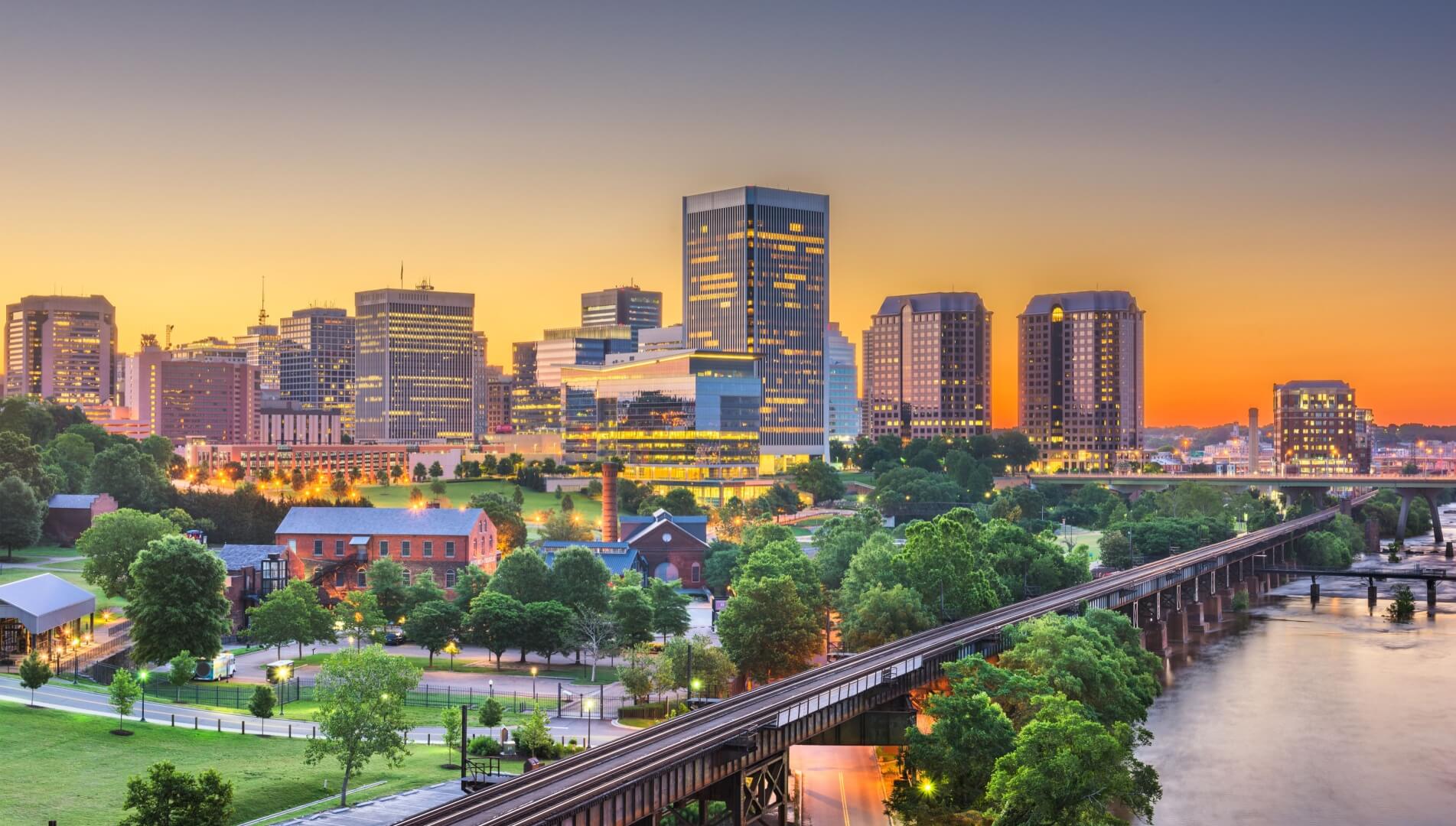
With a 2024 rentership rate of 57.7%, Richmond stands among the most renter-oriented cities in both Virginia and the nation, well above the state and national averages.
Previously ranked as one of the best places for house renters, Richmond has maintained its strong appeal for those choosing to rent here. Despite modest fluctuations over the past decade, it remains a stronghold for renters in general, supported by ongoing urban revitalization, affordability challenges, and the enduring draw of city living.
Key Highlights
- With 57.7% of households renting last year, renting in Richmond is far more common than in Virginia overall, where the renter share stands at 32.9%.
- Recent data shows that Richmond’s rentership rate has jumped from nearly 55% in 2023 to almost 58% in 2024.
- Despite annual fluctuations in renter share, the state capital has remained a predominantly renter city across the past decade, with rentership peaking at 62.6% in 2020
- Education, job opportunities, and the downtown scene keep pulling in students and young professionals to Richmond. These groups tend to rent due to financial and lifestyle aspects, as well as convenience, often choosing locations close to major employers and campuses.
Richmond, One of the Most Renter-Dominated Cities
With more than half of its occupied housing units rented rather than owned, Richmond joins the ranks of urban centers such as Baltimore, MD, or Columbus, OH, where renters outnumber homeowners. The city’s rentership rate puts it over the Virginia state average (32.9%), as well as the national one (34.7%).
Several factors sustain Richmond’s renter-heavy profile, beginning with steady population growth driven by young adults and students drawn to the likes of Virginia Commonwealth University or University of Richmond, as well as the city’s expanding job market. In fact, this renter-majority status reflects the city’s shifting housing landscape over the past decade, as new residents have fueled demand for rental housing close to downtown and major employment centers, in particular.
This influx of younger residents has coincided with a wave of urban revitalization projects that have transformed neighborhoods like Scott’s Addition and Manchester into hip, rental-rich communities. At the same time, financial barriers in the homebuying market, including rising home prices and elevated interest rates, continue to make ownership less attainable, steering many first-time buyers toward rental options instead.
Yearly Upticks Show Renewed Rental Momentum
From 2023 to 2024, Richmond’s rentership went from 54.9% to 57.7%, which could signal renewed momentum in the rental market after several years of smaller changes. This increase reverses the mild declines seen in the late 2010s, suggesting that more residents are opting — or being pushed — into renting due to affordability pressures, higher mortgage rates, and a tight housing supply.
Why Renting in Richmond Metro Appeals to Many
Beyond just city level, the Richmond metro has been ranked the best U.S. metro for single-family home renters, according to a Point2Homes study comparing 75 major metros across housing, economic, and lifestyle factors. Scoring 63.4 out of 100, it stands out for job opportunities, quality of life, and other key reasons.
A strong job market cements the metro’s appeal, as the study ranks Richmond’s annual job growth and unemployment rates among the lowest in the country. With multiple Fortune 500 companies and a growing tech sector, renters here may benefit from economic stability without the high costs seen in larger metropolitan areas. Notably, the study also revealed that the average single-family renter household earns about $82,860, which, combined with a moderate cost of living, can offer more financial breathing room compared to other major metros.
Renters in Richmond also enjoy space and comfort, with single-family homes averaging 3.9 bedrooms and plenty of parking. More than half of them can comfortably afford housing costs, reflecting a rare balance between size, price, and convenience. In fact, the metro area’s overall quality of life (from short commutes and good air quality to arts and culture scene) makes it one of the most balanced and livable markets.
Taken together, these factors help explain why Richmond has become one of the most renter-dominated cities. With rentership climbing again in 2024 and homeownership becoming an increasingly distant goal for many, renting in Richmond now represents more than just a temporary stage: it’s become a defining feature of the housing landscape.
Methodology
Point2Homes.com is a real estate listing portal for rental homes across the United States. Part of Yardi Systems, Point2Homes covers housing trends and news through comprehensive studies that draw from internal data, public records, governmental sources, and online research.
- For this study, we looked at rentership rates in Richmond and the state of Virginia.
- The report uses data on rentership evolution between 2014 and 2024, as per the U.S. Census Bureau, ACS 1-year estimates. Since ACS 1-year estimates were not published for 2020, data from the Decennial Census was used instead.
- Image: Sean Pavone/Shutterstock.com
Fair use and redistribution
We encourage and freely grant permission to reuse, host or repost this article. When doing so, we only ask that you kindly attribute the authors by linking to Point2Homes.com or this page, so that your readers can learn more about this project, the research behind it and its methodology.
