
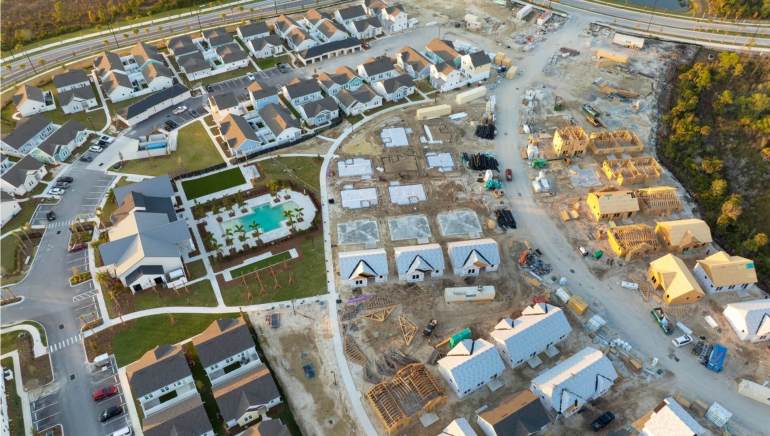
SMART CAPITAL, SMARTER LIVING:
BTR INVESTMENT OPPORTUNITIES
Why build-to-rent is reshaping real estate investment
8.7%
SFR BTR completions as % of rental construction
251K
BTR units across
the U.S.
110,727
SFR BTR units
under construction
3-bed units
make up majority of SFR BTR completions
Source: Yardi Matrix
What is SFR BTR?
Single-family rentals (SFR) in build-to-rent (BTR) communities are purpose-built rental homes within larger, long-term rental communities. They offer renters the comfort of single-family homes and the convenience of professionally managed neighborhoods, which take away the stress and worry of home maintenance. BTR is a subset of the broader single-family rental (SFR) segment of the housing market.
Unlike scattered-site SFR portfolios, often composed of aging housing stock acquired by smaller landlords, BTR developments are professionally built, managed, and maintained, often within amenitized, master-planned communities.
These homes are built to institutional standards and designed with renter preferences in mind. With new appliances and streamlined operations, BTR assets are proving more profitable and predictable than traditional SFR investments. As sourcing existing inventory becomes more competitive and expensive, purpose-built SFR provides a direct pipeline of high-quality, ready-to-lease units that align with modern demand.
A flexible strategy for developers in uncertain markets
For homebuilders, BTR offers a lower-risk strategy in times of economic volatility and shifting buyer demand. By partnering with institutional investors or building rental-ready homes directly, developers gain an alternative disposition channel beyond the traditional homebuyer. This dual-exit strategy enables continued construction activity even when mortgage rates rise or for-sale absorption slows.
Builders benefit from predictable revenue streams, bulk purchasing power, and stable labor demand through standardized floor plans and large-scale projects.
As the BTR model continues to mature, it creates a durable bridge between the for-sale and rental markets — allowing developers and investors to work together in addressing America’s housing shortage while tapping into a high-demand, high-growth asset class.
BTR can be a scalable solution to the deepening housing shortage
The U.S. housing market continues to face a significant and persistent supply gap. Years of underbuilding following the 2008 financial crisis have led to a shortfall of millions of homes. While estimates vary, leading sources like Freddie Mac and Rosen Consulting Group peg the national deficit between 3.8 and 5.5 million housing units (NAR, Brookings). Despite recent increases in construction activity, supply has not kept pace with demand, especially in high-growth metro areas.
The build-to-rent (BTR) sector has emerged as a critical tool for adding new, purpose-built housing stock quickly and efficiently in underserved segments of the market, presenting a clear opening for institutional investment.
Purpose-built rentals
Purpose-built rentals are residential buildings specifically designed and constructed to provide long-term rental housing. Unlike condominium units or homes that may be rented out by individual owners, purpose-built rentals are owned and professionally managed by companies or institutions, offering greater stability and consistency for tenants. These buildings are tailored to meet the needs of renters, often featuring dedicated amenities and services, and they typically fall under rental regulations that enhance tenant protections.
Vertical BTR vs. horizontal BTR
Within the Build-to-Rent (BTR) market, there are two main product types and investment models: “vertical” and “horizontal” build-to-rent. Vertical BTR refers to the traditional multifamily apartment building, while horizontal BTR refers to single-family homes, townhomes, or “cottage” communities built specifically for rent.
Vertical BTR (multifamily apartments)
This is the classic apartment-building model, where multiple housing units are stacked on top of one another.
- Structure: Mid-rise or high-rise apartment buildings and complexes with multiple units on different floors.
- Density: Vertical BTR is ideal in high-density urban areas with high land costs because it maximizes the number of units developers can fit on a small land footprint.
- Residents: Younger renters and single professionals, as well as couples and families who commute to work prefer the urban lifestyle.
- Amenities: Vertical BTR typically features some shared amenities, with the newest apartment buildings boasting fitness studios and gyms, pools, and inviting common spaces.
- Construction costs: Higher hard costs due to the need for special equipment, complex coordination, and structured parking.
Horizontal BTR (single-family communities)
Horizontal BTR is a newer purpose-built model that combines the privacy and spaciousness offered by single-family homes with professional management, characteristic of apartment complexes.
- Structure: Units are built side-by-side, either as detached houses, duplexes, or townhomes, but they are never stacked on top of each other, like in the case of apartments.
- Density: Horizontal BTR is a better fit for suburban and exurban locations, with more land available and lower population densities, which allow developers to spread units and communities across a wider land area.
- Residents: Horizontal BTR attracts families, empty-nesters, and others who desire more space, privacy, and their own yard without the commitment of homeownership.
- Amenities: Includes community-style amenities like pools and clubhouses, but each unit feels like a private home.
- Construction costs: Although the units are larger, they are often cheaper to build than vertical apartments because horizontal BTR bypasses the higher costs of land in urban areas and avoids the complexity of vertical construction.
SFR BTR vs. scattered-site SFR vs. traditional multifamily
What makes BTR properties stand out is that they have all the characteristics of single-family homes, but are built exclusively for renters who want more than what multifamily properties can offer in terms of space and amenities.
There are some similarities between BTR communities and multifamily properties, in that they are purpose-built rental homes and their target demographics start to overlap under the current market conditions, but BTR homes do not have any units attached above or below them and are long-term rentals.
BTR differs from scattered-site SFR and traditional multifamily in location, design, amenities, management, and target demographics, among others.
| Single-family rentals in build-to-rent communities | Scattered-site single-family rentals | Multifamily properties | |
|---|---|---|---|
| Location | Primarily located in transit-oriented suburbs and exurbs of major metros, as well as in-demand secondary and tertiary markets | Highly variable mix of urban, suburban and exurban locations | Primarily located in urban areas, as close as possible to CBD |
| Development process | Mostly newly built | Single-family properties left vacant after different foreclosure crises | Can either be newly built or acquired as existing structures |
| Target demographics | Families, professionals, and retirees who are looking for more space, privacy, a home-like experience and long-term stability, without the commitment of buying | Tenants preparing for homeownership, families | Young professionals, singles, and small families who value proximity to city centers |
| Design | Purpose-built rental communities with a mix of attached and detached single-family homes | Mix of renovated and unrenovated single-family homes | Mid-rise to high-rise buildings, particularly in high-demand urban areas where land is scarce and expensive |
| Amenities | High quality home features and home and community amenities | More limited amenities | High variety of home features and community amenities |
| Management | Professional property management | Small investors and “mom-and-pop” landlords, non-profits, land banks and local governments | Professional property management |
| Purpose | Permanent rentals | Long-term rentals and permanent rentals, as well as lease-to-own | Permanent rentals |
| Maintenance | Typically experience fewer maintenance issues and tenant complaints | Fewer maintenance issues and tenant complaints | More active management: leasing efforts, tenant screenings, and in-unit and common areas maintenance |
Sources: Yardi Matrix, CBRE
The four types of single-family build-to-rent
Investors have a wide range of options in the SFR BTR space, making it easier to tailor strategies to specific markets, renter demographics, and return profiles.
The variety spans from horizontal multifamily communities, featuring 1-3 bedroom, single-story cottage homes with private backyards and full amenities like pools and clubhouses, to two-story townhomes and row houses in the Western U.S., which appeal to renters seeking more space with fewer shared amenities.
Traditional detached homes in markets like the Southeast offer larger footprints (up to 2,500 sq ft) and attract families looking for suburban living, while luxury BTR homes in high-demand areas like California and Nevada offer premium space (2,000–3,000 sq ft) and rents upward of $7,000 per month.
This range of product types — across size, style, rent level, and amenity offerings — gives investors the flexibility to diversify portfolios, target different renter segments, and enter various geographic markets based on risk tolerance and investment goals.
Horizontal multifamily / horizontal apartments
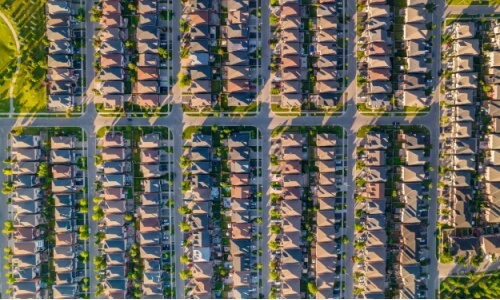
- 1,500 sq ft
- 1-3 bedrooms
- $1,300-$1,900 rents
- Single-level cottage homes, enclosed small backyards
- NextMetro & Lennar in Phoenix and Denver pioneered concept
- Fully amenitized community-pool/clubhouse
Two-story townhomes and / or attached row houses
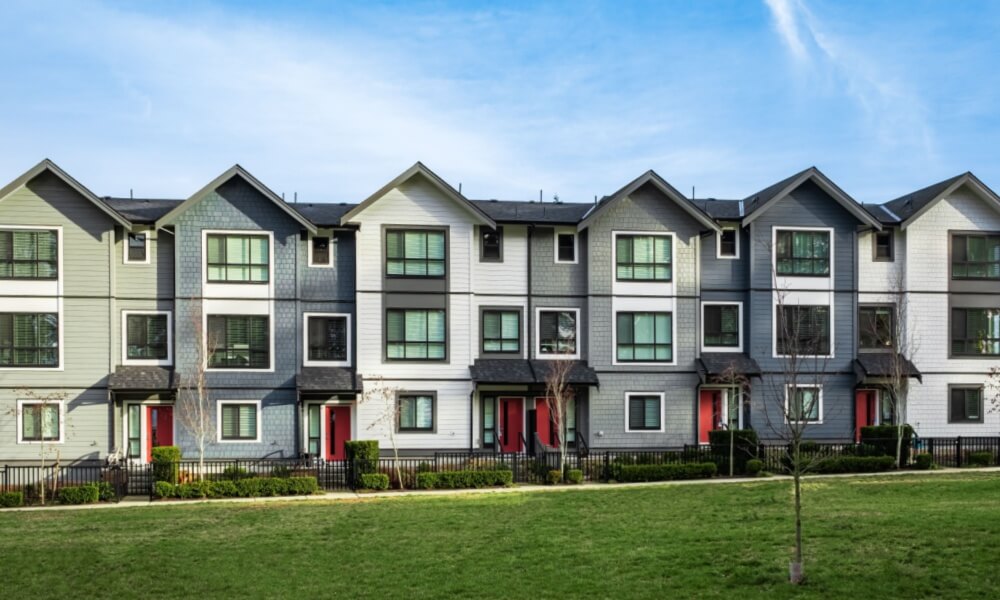
- 1,700 sq ft
- 2-3 bedrooms
- $1,300-$1,900 rents
- Western U.S.
- Partial to no amenities
Traditional single-family detached homes
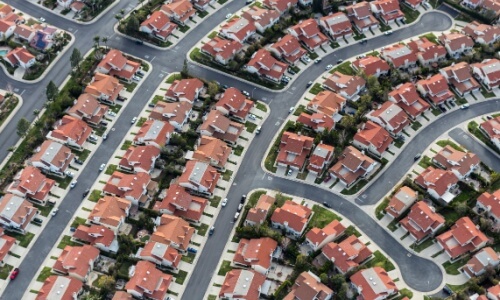
- 1,800-2,500 sq ft
- 3-4 bedrooms
- Southeastern U.S. (Nashville, TN)
- Larger lot sizes
Luxury single-family homes
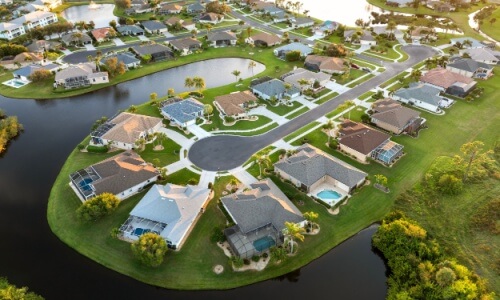
- 2,000-3,000 sq ft
- >4 bedrooms
- $4,500-$7,000 monthly rents
- California + Nevada
- No community amenities
Specific characteristics of single-family rentals in build-to-rent communities
As opposed to scattered-site single-family rentals and multifamily housing, single-family rentals in build-to-rent communities come with a host of advantages that help explain the sector’s growth beyond just the opportunity created by the pandemic and the need for more, and more affordable space.
Location

Typically located in less dense suburban or exurban locations within one-hour commute of urban centers.
Some BTR developments are located in infill locations and/or within a master-planned community.
Transit-oriented

Convenient access to major highways and public transportation are often critical features of competitive BTR communities.
Neighborhood feel

Low density homes with yards and additional greenspaces like parks are an attractive aspect of BTR communities to young families and empty nesters.
Community amenities

Many BTR communities offer amenities like walking trails, green spaces and dog parks, while some also offer more attractive amenities like swimming pools, clubhouses and gated access.
Maintenance / landscaping

Performed by management and usually with some charge-back to residents.
Differs from scattered SFR properties, renters of which usually are responsible for maintenance, lawn care and landscaping.
Parking

Dedicated parking garage attached to home with driveway.
Some attached units exclude dedicated parking.
Sources: Yardi Matrix, CBRE
Investing in SFR BTR: What are the advantages?
Demand for rental homes is strong and will continue to be driven by rising home prices that have made homeownership unaffordable for many. This presents investment opportunities in the SFR BTR sector.
In Q2 2024, investors purchased 16.8% of all homes sold in the U.S., with most of the SFR homes in the U.S. being owned by mom-and-pop investors. While institutional investors have started entering the market, institutional ownership still comprises only about 3% of the market. 60% of builders report selling homes to investors from February 2024 – April 2024.
What’s more, BTR assets deliver 15–18% IRRs and up to 15% higher rents than traditional multifamily. Longer tenancy, meaning an average of 25 to 35% longer than in the case of multifamily units, reduces turnover costs and boosts NOI. Add to that a clear operational efficiency due to the professional management characteristic of BTR and the advantages become even more evident.
Increased demand

Demand for rental homes is strong and will continue to be driven by rising home prices that have made homeownership unaffordable for many
High inventory

Builders are stuck with more inventory than they can sell as sales slow
Lower costs

Selling to landlords is cheaper – involves less customizations and reduces sales and marketing expenses
Bulk packages

Offering bulk packages of unsold houses at discounts as high as 20% to landlords
Long-term rental occupancy

SFR BTR have higher retention rates and more stable income flow
Higher rents

Given their suburban location and larger unit sizes, rent growth for SFR BTR has been stronger than multifamily
Can BTR be affordable and not compete with traditional multifamily?
Yes, if they’re strategically designed and located, BTR can complement rather than compete with multifamily. BTR is most viable where homeownership is out of reach for many, but demand for space and privacy remains high. In some markets, according to a Walker & Dunlop analysis, renting a BTR home costs 27% less than owning a comparable home.
Indeed, upfront construction costs can be high. Building detached single-family homes or townhomes is more expensive per square foot than multifamily apartments. Land costs vary significantly by region, but they tend to be higher due to the horizontal sprawl. Roads, utilities, and amenities (parks, pools, dog parks) add to upfront costs. Although they are often shared across units, these costs still represent a significant capital outlay. Material costs have risen by 36% and labor shortages exceed 440,000 positions nationally.
However, BTR communities are typically located in suburban or exurban areas where land is more affordable. Smaller footprints, efficient layouts, and shared amenities can reduce per-unit costs. Horizontal multifamily models (e.g., duplexes, cottage courts) offer affordability without sacrificing privacy. What’s more, long-term, these costs are typically lower per unit than multifamily due to longer lease terms and lower turnover. BTR tenants often sign 2–3 year leases, creating a more stable community and reducing turnover costs.
BTR communities can be affordable, scalable, and non-competitive with traditional multifamily rentals if they focus on suburban or exurban locations with high rental demand, optimize design and operations for cost efficiency, and serve a distinct renter profile seeking space, stability, and flexibility.
In many Yardi Matrix markets, renting is a better deal than owning
Average home mortgage payment vs. average rent in select markets
Current housing and economic dynamics are increasingly favorable for the build-to-rent investment model. With elevated home prices and persistently high mortgage rates pricing out many would-be buyers, a growing share of households are turning to single-family rentals as a more attainable alternative.
Rent growth for SFR BTR outpaced multifamily properties in one-third of the top Yardi Matrix metros
During and especially after the pandemic, BTR communities received a boost from the out-migration from high-density urban cores. The larger and less expensive units available in suburbs, exurbs and secondary BTR markets became more in-demand than compact multifamily units in city centers. As a result, rent growth for SFR BTR properties has been stronger than multifamily. However, annual growth has slowed over the last few months as sustained construction eased demand.
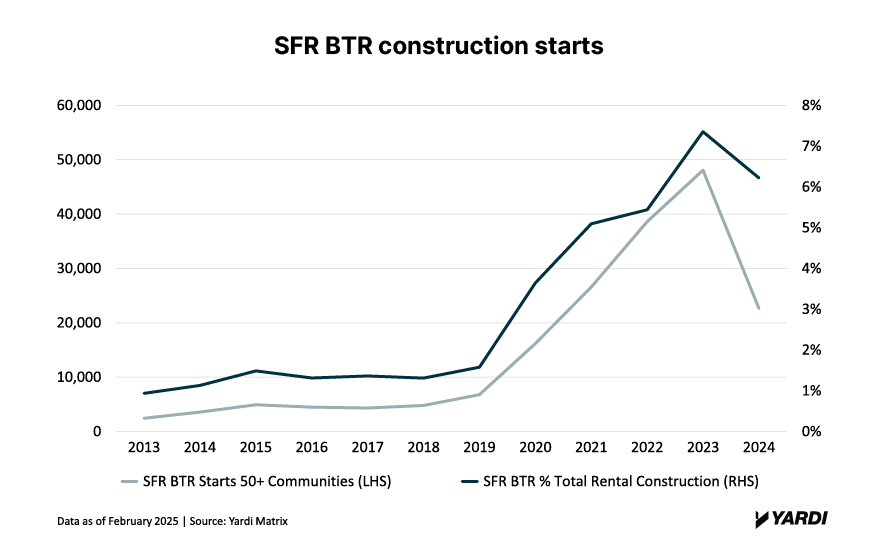
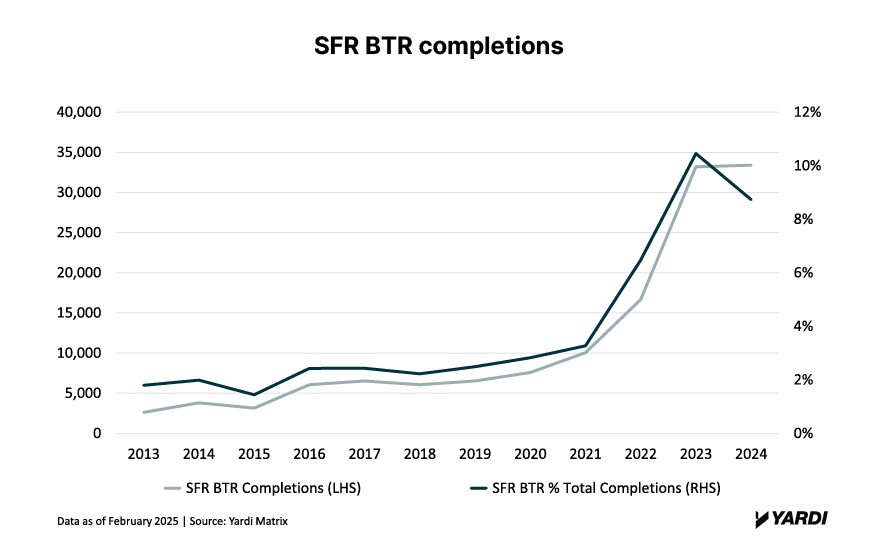
Completed units & starts are at historic highs
The BTR segment has consistently ranked among the fastest-growing areas of single-family home construction, a trend that persisted through 2024. Offering renters the convenience and low upkeep of renting alongside the space, privacy, and comfort of a single-family home, SFRs meet key market demands. In response, builders are accelerating new home construction, addressing housing shortages and expanding rental options.
Rising construction costs and labor shortages are expected to dampen the exponential growth of the BTR sector. However, demand driving factors such as growing unaffordability and renters’ need for space continue to fuel the development of single-family rental communities.
According to Yardi Matrix, the SFR BTR sector barrels along with 39,000 completions in 2024 alone & nearly 110,000 rental houses under construction across the country.
While the build-to-rent market remains resilient, projections indicate a moderate slowdown in construction activity post-2025. Single-family BTR project starts are forecasted to decline by 6%, and multifamily deliveries are expected to drop by 14%, according to industry data. Despite this, the BTR sector continues to represent a substantial portion of new rental supply, with current development pipelines positioned to maintain steady delivery volumes through 2025.
Sun Belt metros lead with highest SFR supplies
Supply is concentrated — and continues to expand — in the states and metros that are seeing the most significant population growth. Developers are planning and building new BTR communities precisely where demand is strongest.
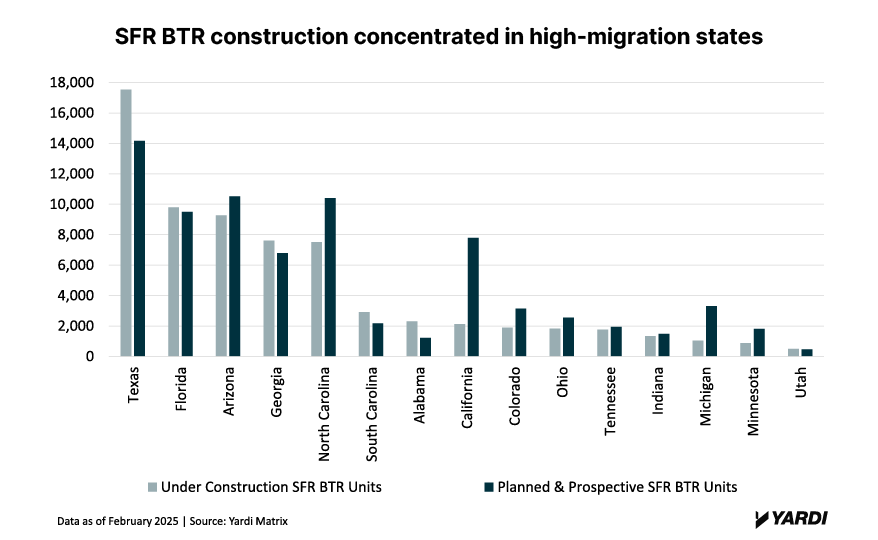
Texas, Florida, Arizona, and Georgia are leading the way, with thousands of new single-family rentals completed or underway in 2024. Texas and Arizona delivered around 7,000 and 4,800 units, respectively, while Florida saw its inventory grow with over 5,300 new units, all finished last year, and nearly 7,800 more in progress. Remote workers, professionals of all ages and entrepreneurs are moving to these areas, creating demand and ensuring that market conditions remain favorable for the further expansion of the BTR segment.
For example, the number of houses for rent in Phoenix surpasses that of entire states after the metro added the most rentals in 2024. House rentals in Dallas also grew, as the metro added more than 3,000 units last year. The same goes for Atlanta, a metro where developers built more than 3,000 single-family rentals last year.
Other metros and cities where the inventory of single-family homes for rent got a real boost are located in Florida, North and South Carolina, Ohio and Tennessee. For example, the number of houses for rent in Jacksonville, Tampa and North Port increased by more than 1,000 units in the last five years. Columbus, OH added 2,282 units in the same timeframe, while Nashville, TN expanded its inventory by 1,639 new rental units.
What is driving SFR BTR demand?
During the COVID-19 pandemic and the ensuing rise in remote work, residents were increasingly looking for single-family homes that had home office space and outdoor space. This coincides with the rising population of Millennials who are starting their own families and who need more space, but who can’t afford to become homeowners.
Demographics
Millennials:
- The rising population of 20 to 34-year-olds, who are creating families and looking to leave traditional apartments, but cannot afford homeownership, especially in coveted suburban neighborhoods
- Even high-income millennials are increasingly renters by choice, preferring BTR’s commitment and maintenance-free nature
Baby boomers and empty nesters:
- Older generations prefer the financial flexibility and low-maintenance lifestyle that renting offers
- 31% of BTR tenants were previous homeowners, and this ratio was much higher among older families with children and older singles and couples
Remote work and work from home trends
- 53% of workers are hybrid
- 68% of U.S. firms offered work location flexibility in Q4 2024, according to the Flex Index
- BTR homes are more conducive to work than noisy apartments
- They offer more space for multiple home offices and workspaces
Declining homeownership affordability
- U.S. housing shortage is an estimated 3.9M units, with the most prevalent shortages in the South
- SFR is prime for millennials and blue-collar workers who would like to buy a house but are priced out: 61% of renters in the largest metros are priced out of homebuying
- Monthly mortgage cost of a single-family home far exceeds average rent nationwide
- Additional home ownership costs like insurance, taxes and maintenance also continue to rise
Concluding remarks
The demographic and remote work trends are powerful drivers, but the main force behind the rise in SFR BTR is housing unaffordability and deepening housing shortage issues. Aside from the fact that home prices keep rising, pushing renters to the side, Freddie Mac estimated that the U.S. had a housing supply deficit of 3.8 million units. As previously mentioned, other estimates are even bleaker, claiming that the U.S. has up to 5.5 million fewer units than it needs given current market conditions.
The persistent housing shortage means that SFR BTR communities are a strong addition to the rental housing segment, offering a middle ground between traditional apartments and homeownership.
For renters, they provide the privacy, space, and lifestyle of a single-family home, without the financial burden or long-term commitment of buying a house. Therefore, demand is bound to stay strong.
For investors, SFR BTR offers robust, stable returns driven by rising demand from families, remote workers, and downsizing retirees seeking quality rental housing in suburban or secondary markets.
These properties typically see lower turnover and higher tenant retention compared to multifamily units, and the asset class has proven resilient in varying economic conditions. As housing affordability remains a challenge across the U.S., SFR BTR developments meet a growing need, making them a smart and sustainable addition to the rental landscape.
Frequently asked questions regarding SFR BTR:
What is a Build-to-Rent (BTR) community?
A Build-to-Rent (BTR) community is a purpose-built, rental-only community of single-family homes for rent.
How do BTR communities differ from traditional single-family rentals?
Unlike apartment buildings, BTR homes do not have any other units attached, whether above or below them. Most BTR communities consist of 50 or more homes or townhomes, although sometimes smaller communities make more sense due to space or zoning requirements. What’s more, BTR communities often have shared amenities and an on-site leasing office.
What types of properties are included in SFR BTR communities?
There are four types of single-family rentals included in build-to-rent communities: horizontal multifamily, two-story townhomes and/or attached row houses, traditional single-family detached homes and luxury single-family homes.
Are BTR homes detached or attached units?
BTR homes can be both detached single-family rentals and also attached homes, meaning duplex or townhouse.
Why are SFR and BTR communities considered strong investment opportunities?
SFR and BTR communities are considered strong investment opportunities because of the following factors:
– Rising demand for rentals due to growing unaffordability in for sale sector
– Rising demand due to changing housing preferences
– Superior revenue growth compared to multifamily
– Lower vacancy rates and less resident turnover than traditional multifamily
– More diversity in consumer pool
– Exit optionality: BTR can continue to operate as a rental community or change strategy and start selling to individual homebuyers
What are the key market trends driving SFR/BTR growth?
The key market trends driving SFR/BTR growth are:
– Millennials who need larger homes
– Baby Boomers and empty nesters who want to downsize or move closer to family
– Increase in number of renters by choice or lifestyle renters
– Prohibitive costs in the for sale sector and rising cost of homeownership
– Renters’ increasing need for financial flexibility
– Rise in remote work trends
– Changing population migration patterns
Which cities have the highest concentration of BTR communities?
The top 5 metros with the highest concentrations of BTR units and communities are:
– Phoenix: 4,460 new units
– Dallas: 3,197 new units
– Atlanta: 3,035 new units
– Houston: 2,505 new units
– Charlotte, NC: 1,415 new units
What percentage of new SFR construction is build-to-rent?
8.7% of new rental construction is SFR BTR.
Data sources:
- NAHB Eye on Housing – “The Size of the Housing Shortage: 2021 Data” (December 2022)
- Up For Growth – “2023 Housing Underproduction™ in the U.S.”
- Freddie Mac – “Housing Supply: A Growing Deficit” (May 2021)
- Brookings Institution – “Make it Count: Measuring Our Housing Supply Shortage” (November 2024)
- Yardi Matrix – “Single-Family Rentals in Build-to-Rent Communities” (March 2025)
- CBRE – “Build-to-Rent Residential Market Overview” (October 2024)
- National Association of Realtors – “Housing Shortage Tracker” (June 2025)
- Zillow Research – “Affordability Crisis: Housing Shortage Worsened Despite Pandemic Construction Boom” (June 2024)
- Realtor.com Research – “US Housing Supply Gap Grows in 2023; Growth Outpaces Permits in Fast-Growing Sunbelt Metros” (February 2024)
- Walker & Dunlop – “Built-for-Rent: How a fast-growing rental model is reshaping multifamily investment” (June 2025)
Image credits: Bilanol, Golden Shrimp, Elena_Alex_Ferns, trekandshoot / Shutterstock.com
Created by the Point2Homes Research Team
The Point2Homes Research Team brings together seasoned writers with academic backgrounds in Psychology, Journalism and Cultural Studies, who provide well-rounded perspectives on housing and rental trends. Supporting them are dedicated analysts with advanced degrees in Economics and Diagnostics and Evaluation, specializing in financial analysis and real estate market research. Together, they deliver data-driven insights and in-depth coverage of the rental housing industry.