
BUILT FOR RENTERS:
WHAT BTR MEANS FOR THE MODERN RENTER
See why BTR is the smart, stylish, and stress-free housing option
What are single-family rentals in build-to-rent communities?
Single-family rentals (SFR) in build-to-rent (BTR) communities are purpose-built rental homes within larger, long-term rental communities, offering the best of both worlds for renters:
- the comfort of single-family homes and
- the convenience of professionally managed neighborhoods, which take away the stress and worry of home maintenance.
BTR communities are designed specifically for renters and typically include a mix of detached houses, townhomes, and cozy cottage-style homes, sometimes called horizontal apartments. Most BTR neighborhoods have 50 or more homes and also feature shared amenities like pools, clubhouses, green spaces, and walking trails that make everyday life easier and more enjoyable.
45,646,491
renter-occupied
households
Source: U.S. Census Bureau
14,227,371
total single-family
rental households
Source: U.S. Census Bureau
251K
build-to-rent single-family units across the U.S.
Source: Yardi Matrix
110,727
build-to-rent single-family units under construction
Source: Yardi Matrix
What do SFR BTR communities look like?
The 4 main types of single-family rental homes
Whether it’s a more compact, single-level cottage with a small backyard in a fully amenitized community or a two-story townhome with a bit more room, single-family homes for rent come in all shapes and sizes.
For example, smaller horizontal multifamily homes with pools and clubhouses appeal to those looking for community amenities and a relaxed lifestyle, while two-story townhomes or attached row houses offer more space without the full maintenance responsibilities of a detached home.
Families who want larger yards and more bedrooms can find traditional single-family homes in growing markets like Nashville, and those looking for luxury living can opt for larger homes in California or Nevada, even if those communities don’t have shared amenities.
Horizontal multifamily / horizontal apartments
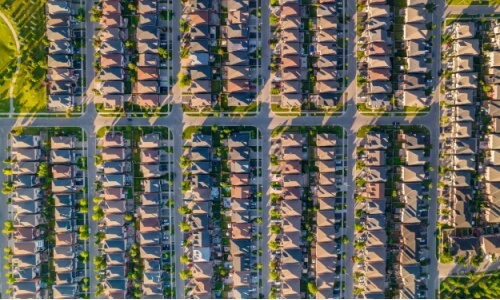
- 1,500 sq ft
- 1-3 bedrooms
- $1,300-$1,900 rents
- Single-level cottage homes, enclosed small backyards
- NextMetro & Lennar in Phoenix and Denver pioneered concept
- Fully amenitized community-pool/clubhouse
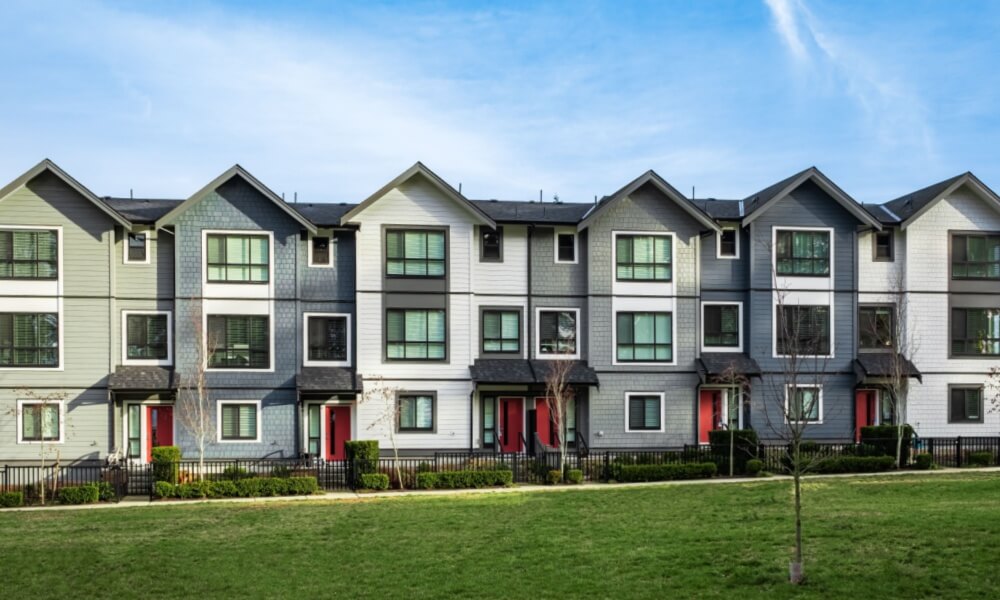
Two-story townhomes and / or attached row houses
- 1,700 sq ft
- 2-3 bedrooms
- $1,300-$1,900 rents
- Western U.S.
- Partial to no amenities
Traditional single-family detached homes
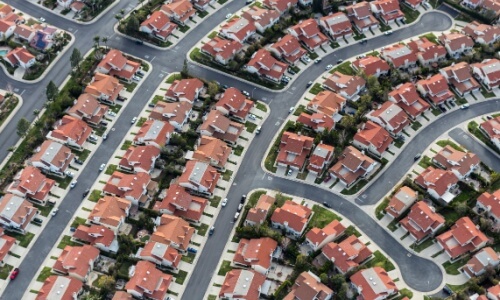
- 1,800-2,500 sq ft
- 3-4 bedrooms
- Southeastern U.S. (Nashville, TN)
- Larger lot sizes
Luxury single-family homes
- 2,000-3,000 sq ft
- >4 bedrooms
- $4,500-$7,000 monthly rents
- California & Nevada
- No community amenities

The most popular single-family rental homes
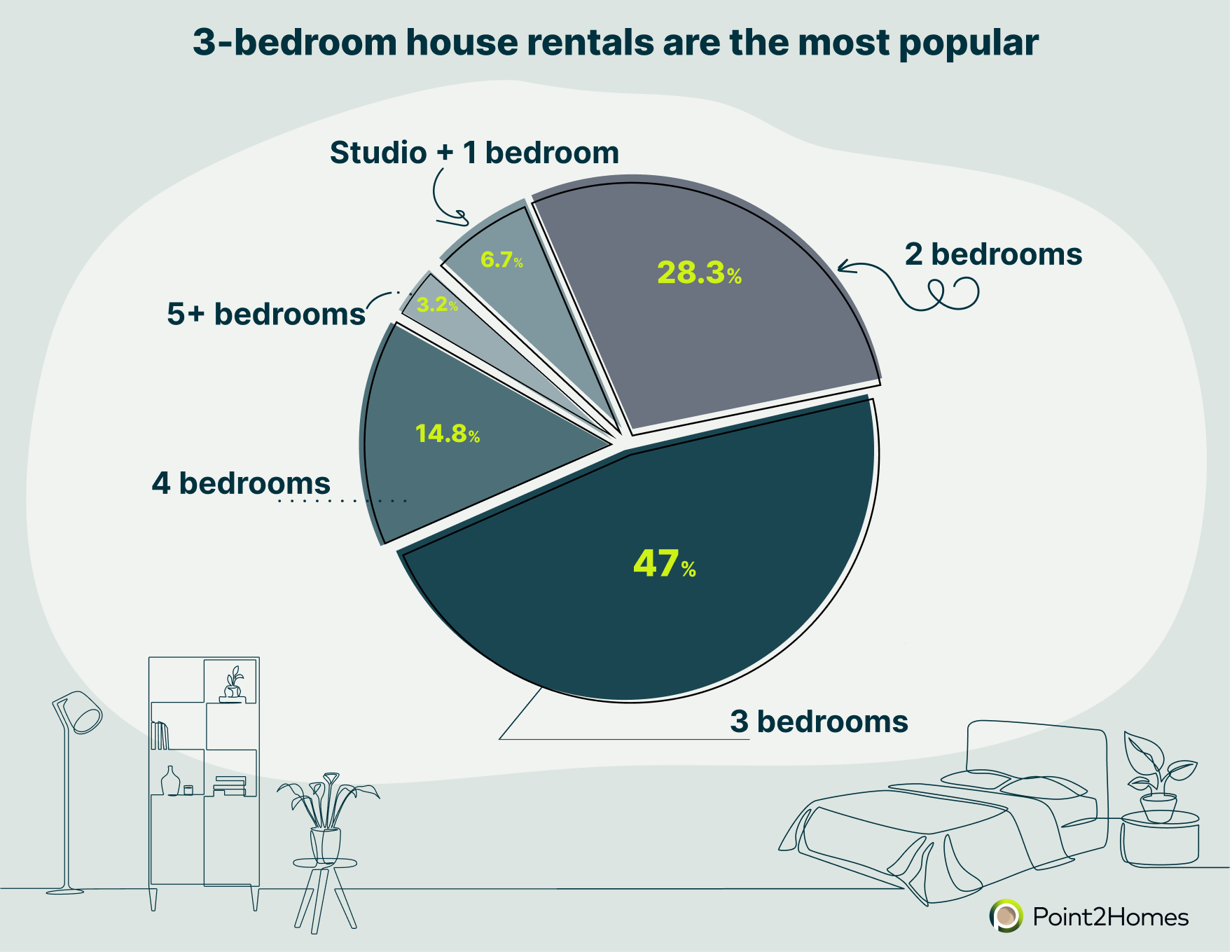
More and more renters are gravitating toward three-bedroom single-family homes — and it’s easy to see why. While some younger Gen Z renters, single Millennials, and downsizing Baby Boomers may be content with smaller spaces, they’re in the minority.
Nearly half of all house renters (47%) opt for spacious three-bedroom homes, while fewer than 1 in 10 choose a one-bedroom rental. In total, close to 7 million renters live in three-bedroom homes, outpacing the roughly 4 million in two-bedroom rentals. These numbers highlight a clear preference among renters who need more room for growing families, roommates, or flexible work-from-home arrangements.
What are the main housing types on the rental market?
The main housing types on the rental market are:
- single-family rentals (SFR) in build-to-rent (BTR) communities
- scattered-site single family homes for rent and
- multifamily properties, or apartments.
BTR is part of the Single-Family Rental (SFR) market, which also includes the so-called scattered site single-family rentals.
The main difference between the two types of rental properties is that scattered single-family rentals can be for sale as well, meaning they could be part of rent-to-own programs, while build-to-rent houses, like apartments, are purpose-built rentals, usually within larger rental communities, which only offer residents the option to rent.
What makes BTR properties stand out is that they have all the characteristics of single-family homes, but are built exclusively for renters who want more than what multifamily properties can offer in terms of space, features and amenities, but can’t afford to buy a home yet.
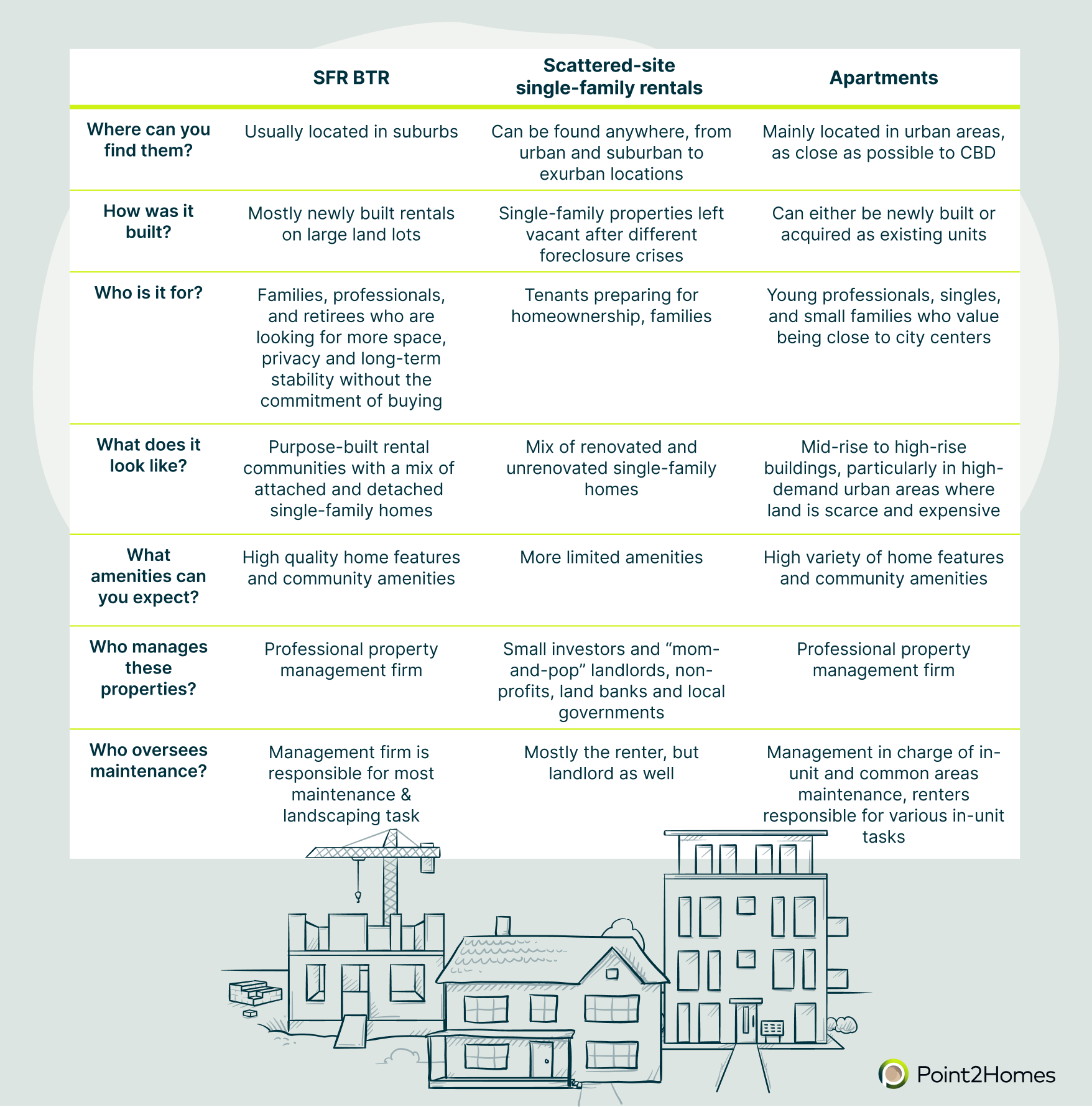
Similarities & differences between SFR BTR, scattered-site SFR & multifamily / apartments
SFR BTR differs from scattered-site SFR and traditional multifamily in location, design, amenities, management, and target demographics, among others.
Sources: Yardi Matrix, CBRE
Why do renters increasingly opt for SFR BTR?
Renters increasingly opt for SFR BTR due to factors like affordability, spaciousness and privacy, flexibility, access to top amenities, like parking spaces, access to public transit as well as major highways etc.
As home prices and living costs continue to rise, BTR is becoming a popular option for Millennials, young families, and professionals who want more space, privacy, and a true neighborhood feel, without the upfront costs of buying. They’re also a great fit for empty nesters and retirees looking for low-maintenance living and more flexibility in their lifestyle.
Single-family rentals in build-to-rent communities come with a host of advantages that help explain the sector’s growth beyond just the opportunity created by the pandemic and the need for more, and more affordable space.

Affordability
Many times, renting can be a better deal than owning, especially in the short term. Homeownership comes with significant extra costs aside from the monthly housing payments, such as property taxes, regular home maintenance costs, homeowner’s insurance premiums, and private mortgage insurance.

Location
Typically located in less dense suburban or exurban locations within one-hour commute of urban centers.

Transit-oriented
Convenient access to major highways and public transportation are often critical features of competitive BTR communities.

Neighborhood feel
Low density homes with yards and additional greenspaces like parks are very attractive for couples, young families and empty nesters.

Community amenities
Many BTR communities offer amenities like walking trails, green spaces and dog parks, while some also offer more attractive amenities like swimming pools and gyms.

Maintenance / landscaping
Maintenance tasks, lawn care and landscaping are performed by management, usually with some charge-back to residents.

Parking
Most units are equipped with dedicated parking garage attached to the home, and come with private driveway.
Extra perks
Amenities
- Ample storage
- Exclusive outdoor space
Smart home technology
- Keyless entries, Wi-Fi-enabled thermostats, smart doorbells, alarm systems & leak detectors
- EV charging in garages
Home designs that accommodate frequent moving & streamline property maintenance
- Durable & low maintenance building products (e.g., high-quality faux wood floors, hard-surface countertops)
- Wider hallways
- Standardized appliances & fixtures
Flex single-family means renters can choose lot size & amenities
- Pet-friendly units
- Fenced-in backyards
- Larger common areas
- Attached garage
Sources: Yardi Matrix, CBRE
Who are the renters who opt for SFR BTR?
Millennials, couples and young families
- The rising population of 20 to 34-year-olds, who are creating families and looking to leave traditional apartments, but cannot afford homeownership, especially in coveted suburban neighborhoods
- Even high-income millennials are increasingly renters by choice, preferring BTR’s commitment and maintenance-free nature
Baby boomers, empty nesters, divorcees
- Older generations prefer the financial flexibility and low-maintenance lifestyle that renting offers
- 31% of BTR tenants were previous homeowners, and this ratio was much higher among older families with children and older singles and couples
Professionals of all ages
- Flexible lease terms make it easier to relocate for job changes or life transitions
- Entry-level and mid-career professionals might prefer a stable home without the hassle of ownership
- Relocating employees might need time to settle before buying
Remote workers
- 53% of workers are hybrid
- 68% of U.S. firms offered work location flexibility in Q4 2024, according to the Flex Index
- BTR homes are more conducive to work than noisy apartments
- They offer more space for multiple home offices and workspaces
During the COVID-19 pandemic, residents were increasingly looking for single-family homes that had home office space and outdoor space. But even after the lockdowns, the crammed apartment life and the noisy hustle and bustle of busy urban hubs forced renters further away from city centers, in search for more space, more privacy and a better quality of life.
This coincides with the rising population of Millennials who are starting their own families and who need more space, but who can’t afford to become homeowners. As such, they’re becoming more and more attracted to the suburbs, fueling the growth of the BTR trend.
What is behind the rise of SFR?
Economic factors forcing renters to rent for longer
High home prices
High mortgage rates
High down payment
Demand vs. supply imbalance
Housing shortage

Supported by high demand from Millennials, as well as favorable economic conditions and vigorous job growth in many markets, single-family rentals are increasingly shaping up to be the solution to renters’ housing problems.
Aside from the inaccessible home prices and high mortgage rates, the housing shortage is affecting renters and potential homebuyers the most. Freddie Mac estimated that the U.S. had a housing supply deficit of 3.8 million units, while other estimates are even bleaker, claiming that the U.S. has up to 5.5 million fewer units than it needs given current market conditions (NAR, Brookings).
Lifestyle factors attracting renters
Desire for more space
and privacy

Single-family houses for rent offer much more space than apartments, making them more desirable.
Desire
for flexibility

Many renters value the freedom and mobility that renting provides, allowing them to easily relocate for work or lifestyle changes.
Focus on experiences over ownership

Lifestyle renters prioritize access to exclusive amenities, personalized services, and unique experiences over the responsibilities of homeownership.
Remote work and professional mobility

The rise of remote work and digital nomadism has created a demand for luxury rentals in desirable locations and for extended stays.
More people are becoming lifestyle renters, drawn to the flexibility, convenience, and freedom that renting offers. Without the hassle of property upkeep or repair costs, renters can enjoy maintenance-free living — a major perk for those with busy lives or frequent travel plans.
Many modern rental communities also offer desirable amenities like gyms, pools, and shared spaces, making everyday living feel more like a resort experience. For younger generations in particular, the focus is shifting away from owning a home and more toward personal fulfillment, experiences, and the ability to adapt quickly to new opportunities or changes in lifestyle.
Where SFR BTR renters are spoilt for choice
Top markets with highest BTR inventory
Top 5 states by BTR completions in 2024:
- Texas: 6,994 units
- Florida: 5,379 units
- Arizona: 4,812 units
- Georgia: 4,095 units
- North Carolina: 2,826 units
Top 5 metros by BTR completions in 2024:
- Phoenix: 4,460 new units
- Dallas: 3,197 new units
- Atlanta: 3,035 new units
- Houston: 2,505 new units
- Charlotte, NC: 1,415 new units
When it comes to the markets where renters have more choices and could more easily find a house for rent that suits their needs, the Sun Belt metros lead. In fact, supply is concentrated — and continues to expand — in the states and metros that are seeing the most significant population growth. Developers are planning and building new BTR communities precisely where demand is strongest.
Texas, Florida, Arizona, and Georgia are leading the way, with thousands of new single-family rentals completed or underway in 2024.
Florida alone saw over 5,300 new units finished and nearly 7,800 more in progress, while Texas and Arizona delivered around 7,000 and 4,800 units, respectively. These fast-growing states — along with others like California and the Carolinas — are attracting remote workers, entrepreneurs, and professionals, making them prime markets for BTR expansion.
For example, the number of houses for rent in Phoenix surpasses that of entire states after the metro added the most rentals in 2024. Renters also have access to a wealth of house rentals in Dallas, as the metro added more than 3,000 units last year. The same goes for renters in Atlanta, a metro where developers also added more than 3,000 single-family rentals last year.
Other metros and cities where renters have access to increasingly more single-family homes for rent are located in Florida, North and South Carolina, Ohio and Tennessee. For example, the number of houses for rent in Jacksonville, Tampa and North Port increased by more than 1,000 units in the last five years. Columbus, OH added 2,282 units in the same timeframe, while Nashville, TN expanded its inventory by 1,639 new rental units.
Concluding remarks
The rise of single-family rentals in build-to-rent (BTR) communities reflects a shifting housing landscape, driven by evolving renter preferences, affordability challenges, and a growing demand for more space and flexibility. These purpose-built communities offer a great blend of privacy, comfort, and amenities typically associated with homeownership, but without the burdens of long-term commitment or maintenance.
Whether it’s young families needing room to grow, Millennials priced out of the market, or empty nesters seeking low-maintenance living, BTR neighborhoods are proving to be a smart and timely solution for a wide range of renters.
As housing shortages persist and homeownership becomes increasingly out of reach for many, BTR communities are emerging as a practical and attractive alternative.
They combine the benefits of suburban living — like yards, garages, and quiet streets — with the perks of apartment-style management and amenities. Renters get the feel of a traditional neighborhood with added convenience, often in well-connected, transit-accessible locations. These homes are not just filling a gap in the market — they’re reshaping the rental experience and offering a lifestyle that aligns with today’s economic realities and lifestyle priorities.
Looking ahead, the continued expansion of BTR housing in fast-growing regions like Texas, Florida, and Arizona signals strong future demand. As more developers invest in creating flexible, high-quality rental housing that meets the evolving needs of modern renters, BTR communities are likely to become a permanent and prominent feature of the U.S. housing market. With the right balance of affordability, space, amenities, and location, these communities are redefining what it means to rent — not as a fallback, but as a preferred lifestyle choice.
Data sources:
- U.S. Census Bureau – “Demographic Characteristics for Occupied Housing Units” and “Tenure by Units in Structure” (September, 2024)
- NAHB Eye on Housing – “The Size of the Housing Shortage: 2021 Data” (December 2022)
- Up For Growth – “2023 Housing Underproduction™ in the U.S.”
- Freddie Mac – “Housing Supply: A Growing Deficit” (May 2021)
- Brookings Institution – “Make it Count: Measuring Our Housing Supply Shortage” (November 2024)
- Yardi Matrix – “Single-Family Rentals in Build-to-Rent Communities” (March 2025)
- CBRE – “Build-to-Rent Residential Market Overview” (October 2024)
- National Association of Realtors – “Housing Shortage Tracker” (June 2025)
- Zillow Research – “Affordability Crisis: Housing Shortage Worsened Despite Pandemic Construction Boom” (June 2024)
- Realtor.com Research – “US Housing Supply Gap Grows in 2023; Growth Outpaces Permits in Fast-Growing Sunbelt Metros” (February 2024)
Image credits: Leszek Glasner, Golden Shrimp, Elena_Alex_Ferns, trekandshoot, Bilanol, chainarong06 / Shutterstock.com
Created by the Point2Homes Research Team
The Point2Homes Research Team brings together seasoned writers with academic backgrounds in Psychology, Journalism and Cultural Studies, who provide well-rounded perspectives on housing and rental trends. Supporting them are dedicated analysts with advanced degrees in Economics and Diagnostics and Evaluation, specializing in financial analysis and real estate market research. Together, they deliver data-driven insights and in-depth coverage of the rental housing industry.