
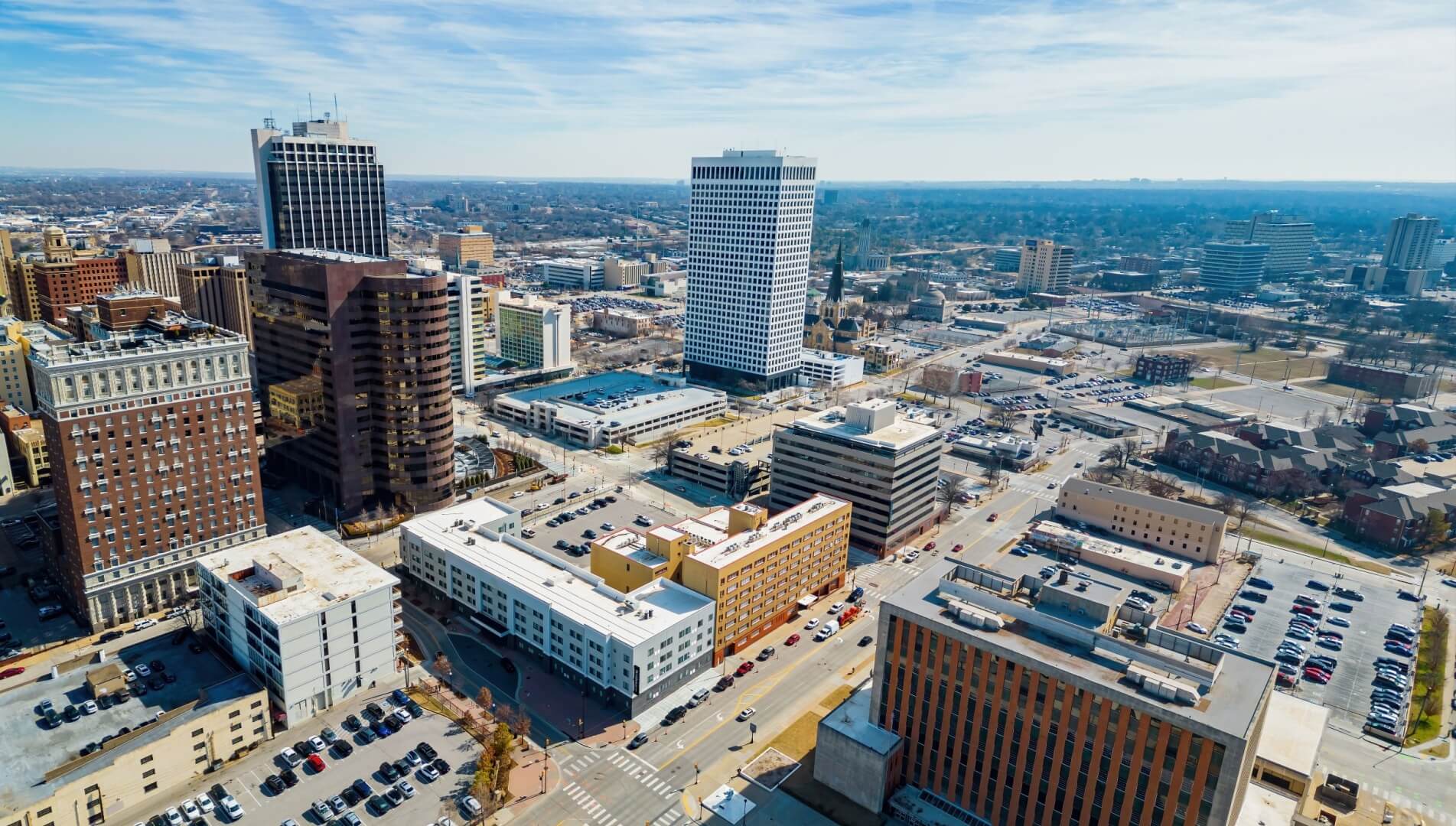
Tulsa is Oklahoma’s second-largest city, and with a healthy economy, affordable cost of living, and a plethora of things to see and do, it’s become an increasingly popular place to call home. But, before diving in and making the move, anyone contemplating a move to Tulsa would be advised to ask a few essential questions first.
One particularly important question is “how easy is it to get around Tulsa?”. For those who don’t drive, it’s crucial to know whether they’ll be able to get around easily.
With that in mind, in this guide, we’ll take a look at how the transport and infrastructure in Tulsa may impact renters who are new to the city.
What Public Transit Options Are There in Tulsa, OK?
The majority of public transport in Tulsa is provided by MetroLink Tulsa, which operates a variety of bus services in and around Tulsa. Operating out of two main transport hubs — Denver Avenue Station, located in Downtown, and Memorial Midtown Station, situated in Midtown — a variety of fixed route and dynamic services provide transport across the city and surrounding communities, including Jenks, Broken Arrow, and Sand Springs.
1. Local Buses
MetroLink Tulsa provides 15 local fixed route services, spreading out across the city from one of the two main transport hubs. Within the Downtown and Midtown areas, coverage is fairly good; however, further out to the surrounding suburbs, stations become fewer and farther between.
The majority of local services run Monday to Saturday, 6 am to 6:30 pm, after which, night bus services take over until around midnight. An additional Express Service to Broken Arrow and the Jenks Connector, both run Monday to Friday from 7 am until 4 pm.
2. AERO Bus Rapid Transit (BRT)
Route 700 is Tulsa’s AERO BRT service, which travels north and south on Peoria Avenue, a 15-mile stretch taking in around 30 stops, including several within Downtown. Running every 15 to 20 minutes between 5.20 am and 9:40 pm Monday to Saturday, and every 30 minutes on Sundays between 7:30 am and 7:30 pm, it provides a regular and reliable option.
3. MicroLink
To fill in the gaps between the fixed route services, MetroLink Tulsa introduced MicroLink. This on-demand, shared rideshare service operates within seven established zones, and matches requests from numerous riders to create a flexible yet affordable alternative to fixed routes. Rides can be requested via the GoPass app.
4. E-Scooter Hire
Tulsa offers numerous electric scooter share programs, particularly within the Downtown area. Lime, Bird, and Beam scooters all operate within the city, and it’s normally fairly quick and easy to find a ride.
How Much Does Public Transport Cost in Tulsa, OK?
A three-hour, transferable pass for all Tulsa bus routes costs $2, while a day pass is $4. A 7-day pass, available via the GoPass app, costs $20, and a 31-day pass is $50. Tickets can be purchased on the bus with cash or via the GoPass app. MicroLink fares cost the same as standard bus fares.
Meanwhile, under-18s and seniors over 75 ride for free.
Is It Feasible To Cycle in Tulsa, OK?
Tulsa is considered somewhat bikeable, and there are some bike lanes along major routes. Cycle trails are most common along the riverside neighborhoods and within Downtown. In the majority of suburbs, however, there’s very little cycle infrastructure.
Driving in Tulsa, OK
Tulsa is generally considered a fairly car-dependent city, particularly for those not living within the downtown hub. In most other parts of the city, a car is more or less a necessity for commuting, shopping, and various other chores.
Fortunately, driving in and around Tulsa is fairly easy, with none of the congestion of larger cities like LA or NYC. The city follows a grid system of thoroughfares and avenues, making navigation relatively easy. Major thoroughfares exist every mile or so, creating easy north-south and east-west travel.
What’s the Average Commute Time in Tulsa, OK?
With an average commute time of just 19 minutes, Tulsa boasts some of the shortest commute times in the country, and well below the national average of 27 minutes.
On-Street Parking and Garages
While driving around easily is great, it’s also important to know that there’s somewhere to park. Fortunately, Downtown Tulsa boasts over 1,000 on-street parking spaces, as well as numerous parking garages. Payment for parking is made easy with the ParkMobile app, but old-style coin machines can still also be found. Parking generally costs $1 an hour on weekdays until 5 pm, and is free in the evenings and weekends.
Image credit: Kit Leong / Shutterstock.com
