
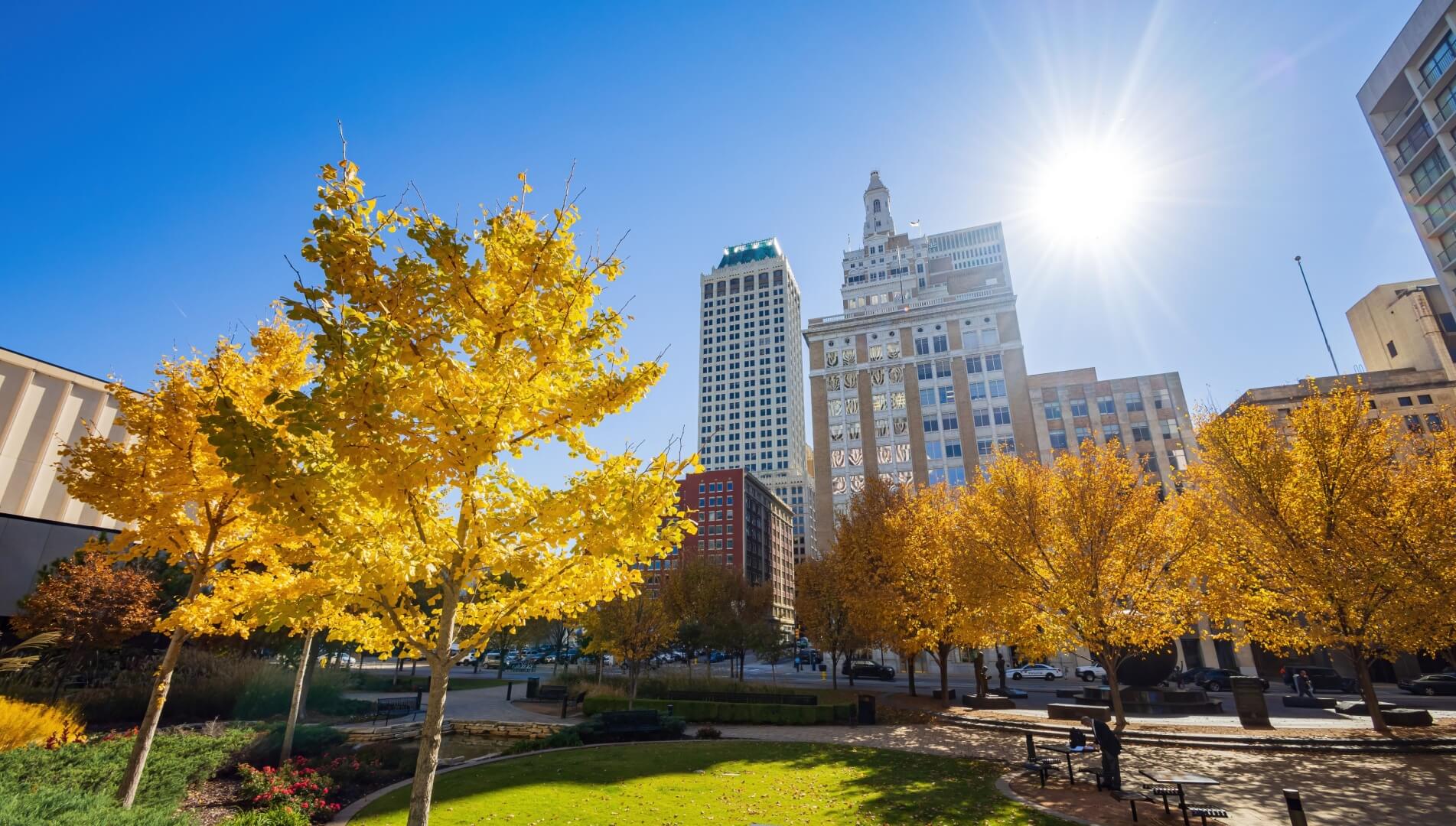
Located in northeast Oklahoma, Tulsa is the second-largest city in the state and is considered by many to be a hub of art and culture. The historic city boasts incredible Art Deco architecture, countless things to see and do, and a friendly atmosphere.
So far, it ticks a lot of the right boxes for renters looking to make the move to Tulsa. But, before committing, it’s well worth digging a little deeper into what life in Tulsa, OK, is really like.
With that in mind, this guide asks and answers 6 essential questions for renters considering a move to Tulsa.
1. Is Tulsa an Expensive Place To Live?
Tulsa is generally considered a fairly affordable place to live, especially when compared to other major U.S. cities. Even so, the general cost of living is just slightly lower than the national average. Where the city excels, however, is in rent and housing costs. With an average rent-to-income ratio of 30%, renters in Tulsa are comfortably able to pay the rent each month and still have plenty left over.
2. Is It Easy To Find Work in Tulsa?
As well as being an affordable place to live, Tulsa has a diverse job market and a healthy economy. The city enjoys one of the lowest unemployment rates in the country at 3.1%, a figure that has steadily been dropping for the past few years.
This is in part due to the diversification of the economy, with traditional economic drivers, such as the oil industry, making way for a far wider spectrum of sectors. In recent years, the tech, real estate, finance, healthcare, education, and aerospace sectors have soared, providing thousands of jobs for Tulsa’s workforce. As a result, people from various professional backgrounds will find work opportunities in the city.
Tulsa is also well known for encouraging a friendly environment for small businesses and entrepreneurs. The city offers numerous tax incentives and schemes to help self-employed workers and start-ups get off the ground.
3. Is Tulsa Good for Families?
Another thing that Tulsa is well known for is its southern hospitality. With a population of over 1 million people, it’s undoubtedly a big city. However, the individual neighborhoods offer a distinct small-town vibe. Close-knit communities and good schools, not to mention an abundance of extracurricular activities and things for kids to do, all combine to create a very family-friendly environment.
Around 20% of the population is children under 15 years old, and over 56% of all households in the city are family-occupied, ensuring there are plenty of other families throughout the city. Some of the best neighborhoods for families include Riverview, with plenty of nearby schools, and Jenks, a peaceful, more rural area with proximity to several excellent school options.
4. Who Else Lives in Tulsa?
While Tulsa is a great place for those looking to raise a family, the city is home to a far more diverse population. The median age is 35, and adults aged 25 to 44 make up the largest percentage of the population, at just over 28%. Many young professionals call the city home, lending parts of the city, particularly in and around downtown, a more youthful and energetic vibe.
5. How Car-Dependent Is Tulsa?
Tulsa is largely considered a fairly car-dependent city, with a lack of public transit options in the suburbs, and fairly low walkability. However, there are exceptions. Downtown neighborhoods, such as East Village, Greenwood, and the Arts District, as well as self-contained suburbs, including North Maple Ridge and Yorktown, boast impressive walk scores and fairly good public transport. As such, a car isn’t so important for people living in these areas.
6. Is There a High Risk of Tornadoes in Tulsa?
Tulsa lies within Tornado Valley, and as such, the city can, and does, experience tornado activity most years. On average, Tulsa witnesses three tornadoes a year, and while the vast majority are no more than strong storms and fail to form a funnel, being prepared for the worst is essential.
Homes with basements are considered to offer the most protection should a major storm strike, so renters may wish to seek these out while house hunting. Comprehensive renters’ insurance with the relevant coverage is also a great idea.
Besides tornadoes, summers in Tulsa are very hot, with temperatures averaging out at around 85 degrees, from July through August, though they can frequently soar over 100. Seeking rentals with air conditioning in Tulsa is strongly advised. Meanwhile, winters reach the other extreme, with temperatures frequently dropping below freezing. Those who struggle with such extremes may find life in Tulsa uncomfortable.
Image credit: Kit Leong / Shutterstock.com
