

For many people renting single-family homes, transportation can be a challenge, especially without a car. Most suburbs still prioritize drivers, making it difficult to get around if you’re relying on other means.
Still, car ownership isn’t always necessary. With the rising costs of fuel, insurance, and maintenance, some renters are reevaluating whether owning a vehicle is worthwhile. At the same time, transportation alternatives are improving, from better bike infrastructure to expanded transit routes and on-demand mobility services.
If you’re looking at houses for rent and trying to balance location with flexibility, it’s worth exploring how to make a car-free lifestyle work. Here’s a look at practical, accessible options for getting around without needing your own set of car keys.
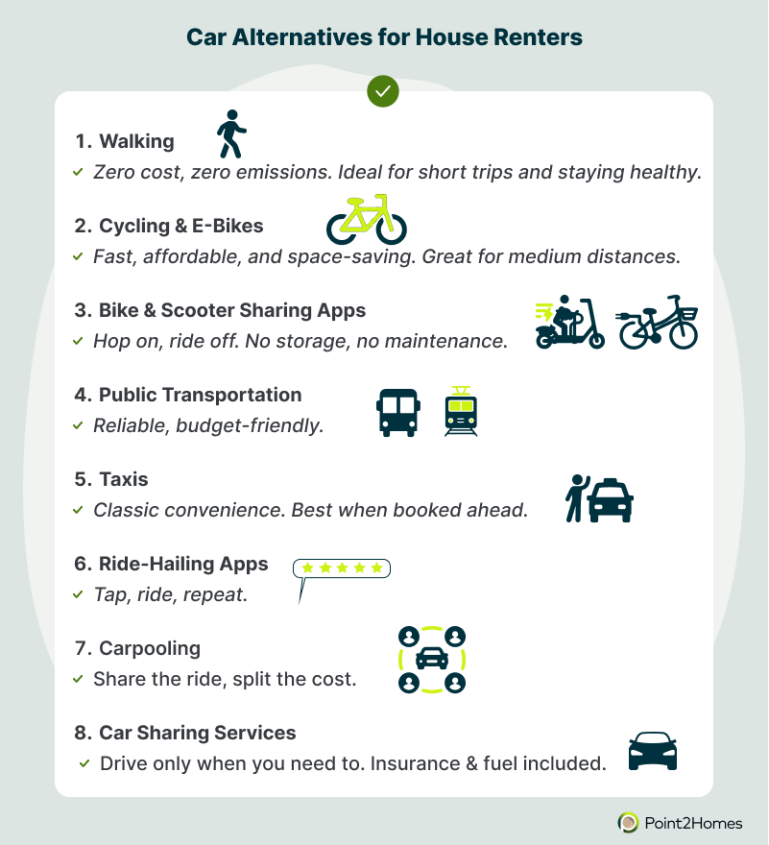
1. Walking
It might seem obvious, but walking is still one of the most effective (and underrated) ways to get around. It’s free, requires no schedule or maintenance, and offers clear health benefits. For renters living in well-located neighborhoods, everyday essentials like grocery stores, parks, schools, and cafes may be closer than expected.
Walking is especially viable in areas designed with pedestrians in mind. Think places with continuous sidewalks, safe street crossings, and a mix of residential and commercial zoning. Increasingly, suburban developments are incorporating these features, making it easier for residents of rental homes to walk more and drive less.
That said, walking has limits. Most people are only willing or able to walk up to a mile or two, especially when carrying items or dealing with weather. And in some parts of the U.S., the lack of pedestrian infrastructure (like missing sidewalks or poorly lit streets) can make walking inconvenient or even unsafe.
2. Cycling
For house renters who are living slightly further out, cycling can be a great alternative to walking. Packing even more health benefits, it’s quicker and more efficient for covering longer distances. Additionally, bicycles are much cheaper to buy and maintain compared to cars, and they barely take up any space, especially for house renters with access to a yard or garage.
Electric bikes, or E-bikes, make it easier for new cyclists to join the fray and can help anyone get further, faster. While typically more expensive than a standard bicycle, they’re still considerably more affordable than a car.
The downside is that some cities don’t have the infrastructure for cycling safely. When cyclists have to share the road with vehicular traffic, it can be extremely stressful for the cyclist. Still, as bike infrastructure expands and e-bike options diversify, cycling continues to grow as a realistic and rewarding choice for car-free renters.
3. Bike or Scooter Sharing Apps
For house renters who don’t own a bike or don’t ride often enough to justify buying one, bike and scooter-sharing services offer a flexible alternative. These app-based systems have expanded rapidly, and in many areas, they’re now a common part of the streetscape.
One of the biggest advantages is convenience. With just a smartphone and a few taps, users can unlock a ride within minutes, often at a fraction of the cost of other transport options. There’s also no need to invest in your own bike or scooter, and you’re not responsible for maintenance, storage, or security.
However, availability can be hit or miss. These services tend to be concentrated in denser areas, so renters in suburban neighborhoods may find fewer options nearby. Weather can also be a limiting factor, as rain, snow, or extreme temperatures can make this option impractical or uncomfortable.
Even so, when accessible, bike and scooter sharing can be a quick, affordable, and enjoyable way to navigate local errands or short commutes.
4. Public Transportation
Public transit has long been a reliable option for people without a car — and for many renters, it remains the most practical choice. It’s efficient, far better for the environment than driving, and generally affordable, helping renters save up by switching from a car.
With the help of modern apps, navigating public transport is easier than ever. Users can plan routes, track delays, and find the lowest fares in just a few taps. That said, crowding and delays, especially during rush hour or on train lines, can be frustrating and occasionally disruptive for time-sensitive trips.
Here’s a breakdown of the main public transport options:
- Buses are well-suited for longer suburban commutes and serve as a reliable backup in bad weather. Many cities have dedicated lanes, making them faster during peak traffic.
- Subways and light rail avoid traffic altogether and offer fast, frequent service across metro areas.
- Trains are great for intercity travel and are among the most energy-efficient transport options.
5. Taxis
Even with the rise of ride-hailing apps, traditional taxi services are still around.
A convenient option for renters without a car, taxis are especially useful when scheduled in advance, often for regular commutes arranged by employers. In these cases, companies may receive discounted rates and more personalized service. Outside of these setups, taxis are typically more expensive than other transportation options and are generally less eco-friendly.
One key advantage is that taxi services are heavily regulated. This means stricter oversight of vehicle maintenance, insurance, and driver background checks, something that’s not always guaranteed with ride-hailing platforms.
6. Ride-Hailing Apps
Ride-hailing apps, like Uber and Lyft, have made getting around more convenient by simplifying the process of booking a ride. Most services are available 24/7, with verified drivers and door-to-door pick-up and drop-off. They’re ideal for late-night trips or hauling heavy shopping bags, and outside of peak hours, they can be a cost-effective choice.
However, during busy times, prices tend to increase as demand outstrips supply, making it an unpredictable service to rely on. At the same time, in areas with fewer drivers, wait times can be long. Like traditional taxis, ride-hailing services aren’t the most eco-friendly option either.
7. Carpooling
When walking, cycling, or public transportation are not viable options and taxis are too expensive, carpooling can be a great alternative to owning a car. At its core, carpooling means sharing a ride with someone who’s heading in the same direction. This is especially useful for commuters with colleagues who can offer a ride. By splitting the cost of fuel, carpooling becomes a more affordable and fuel-efficient choice than driving alone.
However, carpooling depends on aligning schedules, which can be tricky. If the driver’s or passenger’s schedule changes or if the driver goes on vacation, for example, it can disrupt things.
Carpooling apps are available, and while they can help connect drivers and passengers, they’re typically better suited for longer trips. Finding someone heading in the exact same direction within the city can be more difficult.
8. Car Sharing Services
Car sharing is essentially a short-term car rental service, making it a great choice for occasional trips, whether you’re picking up something bulky or taking a short getaway. Compared to the costs associated with car ownership (such as insurance, maintenance, and parking permits), it can be a highly affordable alternative.
Another advantage is the variety of vehicles available, from compact cars ideal for city driving to SUVs with more storage space. This flexibility is enhanced by the ability to rent cars on an hourly basis, offering more control over costs.
Vehicles are typically parked in reserved spots conveniently located throughout the metro area. Users simply sign up through the app, reserve the vehicle, and unlock it using a special card. Once finished, the car is returned to its designated parking spot. Fuel and insurance are generally included in the cost.
However, there are some downsides. Car sharing isn’t the best long-term solution — frequent use can quickly add up in cost. It also requires some planning, as demand can outpace supply during peak times. This can make it less flexible or affordable compared to other options. That said, for occasional trips where extra space or access to a car is needed, it’s a solid choice.
Let’s recap:
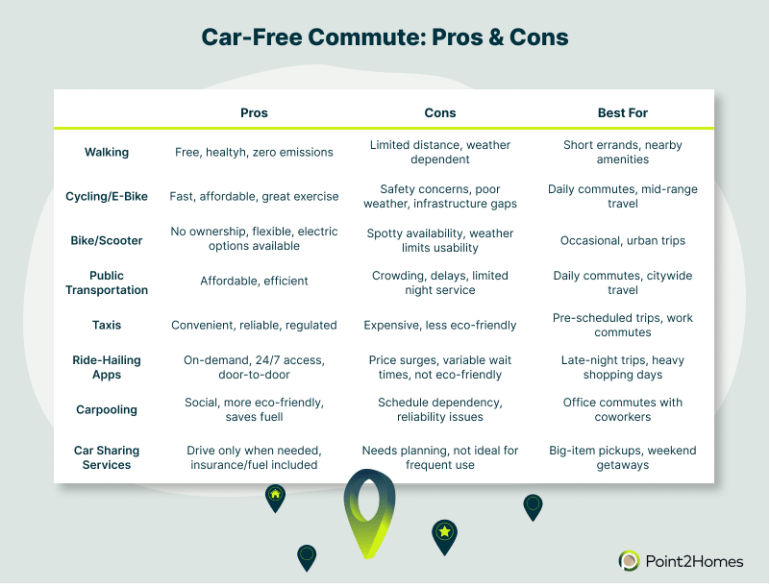
For many house renters, transportation doesn’t have to mean car ownership. With alternatives like walking, cycling, carpooling, and car-sharing services, getting around without a vehicle is more feasible than ever for those who want to try it.
Image credits: Image: Aqi; The Studio; PeopleImages.com – Yuri A/Shutterstock.com
