
Finding the right rental can be a challenging decision, with renters weighing factors like space, privacy, budget, and lifestyle needs. While houses for rent offer more room and independence, apartments can provide convenience and lower maintenance. To help renters determine which option best suits their priorities, we look at the key differences between renting a house and an apartment.
What To Know About Houses for Rent
Rental houses can be a fantastic choice for renters who want more space and privacy and are willing to take on additional responsibilities. In fact, their popularity is on the rise. The latest data shows nearly 14,227,500 single-family renters in 2023, up from 14,205,400 a year prior. To meet the growing demand, 110,727 single-family rentals are currently under construction across 600+ build-to-rent communities—that is, new properties specifically designed for renting.
One popular reason to rent a house is as a “dress rehearsal” for one day owing one. It’s a great way to get the feel of an area, as well as the responsibilities similar to those of homeownership. In this case, rent-to-own houses are a good option for those who are either undecided or not yet in a position to buy. First-time renters may not typically rent a house, but there’s no reason they couldn’t under the right circumstances.
The Advantages of Renting a House
1. More Spacious
The majority of rental houses offer more square footage than apartments, with a bigger number of rooms. This can be ideal for renters planning on having enough space for a home office, gym, or more bedrooms for the kids. Besides the extra indoor space, many single-family rentals also come with a yard.
2. Ideal for Families
Houses can tick a lot of boxes when it comes to finding a suitable place to home a growing family. More bedrooms mean more privacy, while access to a yard can be great for kids and pets. Plus, fewer direct neighbors reduce the chances of disruptive noise.
3. A Better Option for Pet Owners
A previous Point2Homes survey discovered that, for many house renters, the main reason for renting a single-family home instead of an apartment is having better pet accommodations. Compared to apartments, house rentals tend to have fewer pet restrictions, especially those with access to a backyard. Plus, with fewer direct neighbors, there’s less chance of pets causing disturbances.
4. Increased Sense of Privacy
Many houses for rent are detached, meaning they share no walls with neighboring properties. Even semi-detached homes, like town or row houses, typically only share one or a maximum of two walls. Plus, with a private entrance and no shared spaces, houses, in general, offer a greater sense of privacy.
5. Outdoor Access
Access to a backyard is not only great for pets and kids. It can also be a great place to host parties and BBQs, indulge in hobbies like gardening, or relax in the sunshine. Apartments aren’t typically able to offer outdoor space, and if they do, it’s often shared.
6. Parking Is Often Included
Houses for rent tend to be located in places with fewer parking restrictions and more space overall. As such, many single-family rentals come with a driveway, garage parking, or at least street parking. Apartments aren’t always located in areas with abundant parking options, meaning residents must usually pay for a space.
7. Fewer Issues with Boisterous Hobbies
Professional cello players, enthusiastic DIYers, and anyone with a somewhat noisy hobby can benefit from renting a single-family house. With no direct neighbors, louder hobbies are less likely to cause a disturbance. In an apartment, the same hobbies could easily lead to complaints.
The Disadvantages of Renting a House
1. More Work & Maintenance
Houses tend to be more work than apartments. Besides the higher number of rooms to keep clean, there’s also yard work to consider, including keeping the driveway and sidewalk clear of snow and ice in winter months.
Houses also typically need a lot more maintenance than apartments, from roof issues to foundation problems. While it’s not the tenant’s responsibility to deal with them, if such issues occur, they can cause huge disruptions.
2. Less Convenient Location
More often than not, rental houses are located outside the city center, frequently in the suburbs. This can make house renters dependent on driving a vehicle to get to stores, restaurants, and other amenities.
3. Sometimes More Expensive
Although it varies by location, single-family houses tend to cost more to rent than apartments. However, there are exceptions, so it’s always worth researching the local market before dismissing houses for rent on a budget basis.
Similarly, unfurnished houses take more time and money to fill up. While an unfurnished apartment can soon be filled with a few bits of furniture, an unfurnished house may take considerably more time to fill with beds, couches, wardrobes, and everything else that might make it feel homey.
4. Inflexible Lease Terms
Landlords renting out houses generally look for long-term tenants, meaning the lease length is often less flexible than an apartment. This can be an issue for renters who need more flexibility or are undecided about a particular rental.
5. Potential Hidden Costs Are Higher
With more space to keep clean and more maintenance tasks to consider, landlords or property management companies may charge fees at the end of the lease. For example, landscaping, gutter clearing, and driveway cleaning costs could be applied, as well as cleaning costs for the inside, HVAC filter replacement, and other unexpected fees.

What To Know About Apartments for Rent
While typically less expensive than houses, apartments have a few other benefits for renters. They’re an excellent choice for first-time renters, those seeking the convenience of inner-city living, and renters who desire shorter, more flexible lease terms.
The Advantages of Renting an Apartment
Perks of renting an apartment often counteract the disadvantages of renting a house:
- Less maintenance: No worrying about the roof, gutters, foundations, or yard work—many apartment complexes have on-site staff to take care of these things.
- Convenient location: Typically located in urban areas, apartments are often close to public transport, shops, entertainment venues, and workplaces, making them much more convenient, especially for non-drivers.
- More flexible lease terms: Besides long-term leases, apartments are generally available to rent on a short-term or month-by-month basis, ideal for those needing flexibility.
Additionally, many apartment buildings offer communal amenities for residents to enjoy. These can range from communal gardens and terraces to laundry rooms, up to communal swimming pools and gyms in higher-end units.
The Disadvantages of Renting an Apartment
Renting an apartment also comes with certain drawbacks, most noticeably:
- Less spacious: Compared to a house, apartments are generally smaller and rarely offer private outdoor space.
- Less privacy, more noise: Most apartments have units on all sides, resulting in a higher chance of noisy (and nosey) neighbors. Even normal noise levels can be disruptive if the walls are thin, particularly when trying to sleep. Additionally, inner-city apartments can also suffer from higher traffic and street noise.
- Tougher pet restrictions: Without outdoor space, many apartment owners don’t want their tenants to have pets, especially larger ones. Those that don’t have a no-pet policy will typically restrict the size and breed of the pets that are allowed.
- Parking difficulties: It’s less common for apartments to offer a private parking space and those that often charge a permit fee.
Apartment owners also tend to restrict what the tenant can and can’t do in the unit more so than a typical house landlord, especially regarding decor. This can make it difficult to make the unit feel homely.
Which Type of Rental Is Your Best Bet?
Choosing between a house or apartment rental normally comes down to a combination of the renter’s needs and means. Renters should always consider their lifestyle, budget, priorities, and needs before deciding.
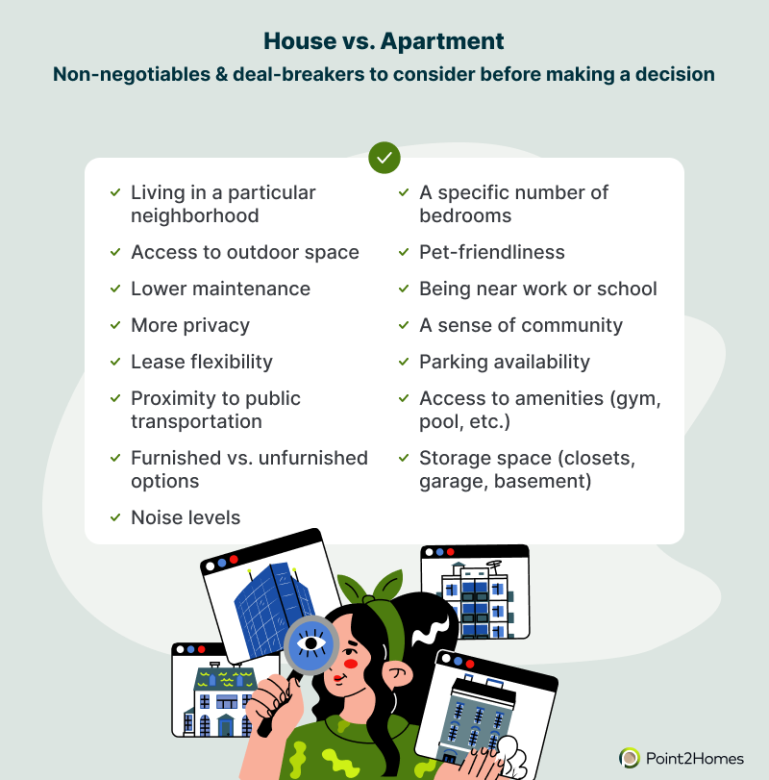
By thinking of non-negotiables priorities, it’s easier for renters to narrow down the search and make the choice between renting a single-family home or an apartment.
While budget is often the biggest factor, some locations around the country display somewhat similar rents for both houses and apartments for rent. Ideally, renters are advised to spend no more than 30% of their income on rent. Location is another important factor, but the decision boils down to the needs and wants of each renter.
Quick Recap:
House vs. Apartment, Key Differences:
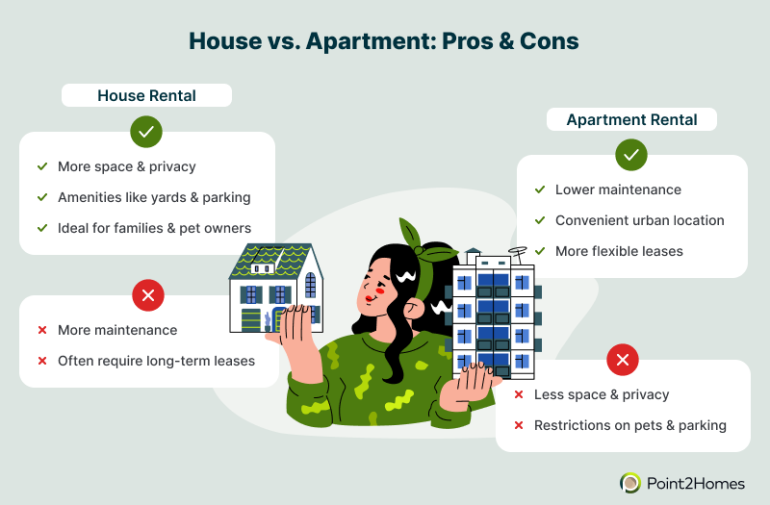
Houses generally offer more space, privacy, and amenities like yards and parking, making them ideal for families, pet owners, and those needing extra room. However, they come with more maintenance and often require long-term leases.
Apartments are typically lower-maintenance and located in convenient urban areas, but they often offer less space, privacy, and flexibility with pets or parking.
House vs. Apartment, How to Decide:
Choosing between a house or apartment depends on location, budget, and lifestyle needs. Renters should consider proximity to work or school, required space, pet policies, and lease flexibility. Creating a list of non-negotiables—like outdoor access or a specific neighborhood—can help narrow down the best rental option.
Image credits: beauty-box/Shutterstock.com; Larika24/Shutterstock.com
