

With most rentals, the landlord is responsible for taking care of the bulk of the maintenance. It’s up to them to ensure the property is structurally sound and meets the required criteria to function as a habitable space.
This is good news for renters, and one of the biggest benefits of renting compared to buying. However, that doesn’t mean that renters don’t have any maintenance responsibilities whatsoever.
Most lease agreements will detail several maintenance tasks that the renter is responsible for. In this guide, we’ll look at what they are.
1. Repairing Damage Caused by the Renter
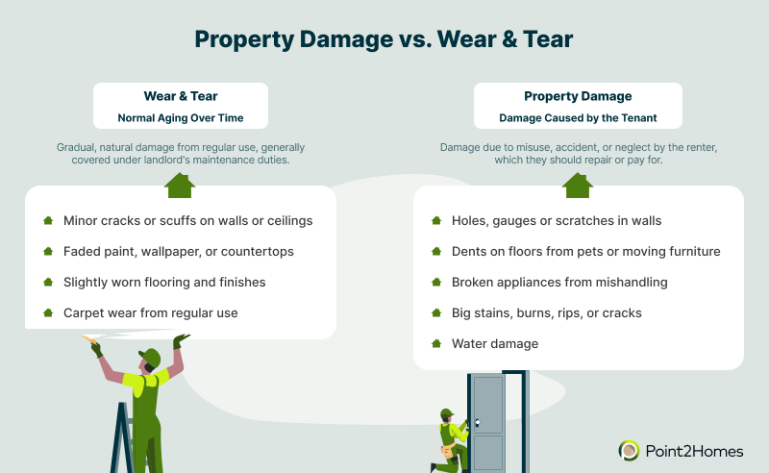
If a renter causes any type of damage in the property, it’s their responsibility to first report it to the landlord or property manager, and then take care of the repair. Depending on the type of damage, renters may be able to fix it themselves as long as it’s up to the correct standard, or they may be required to hire, and pay for, a professional.
Common examples of renter-caused damage include dents, nail or screw holes, and scratches in walls, broken windows, damaged doors, and blocked toilets.
2. Fixing Appliances Damaged by the Renter
In the same vein, any appliances that the renter damages are down to them to fix. From a broken fridge door to an overloaded washing machine or a frazzled microwave, if a renter breaks an appliance through neglect or misuse, they’re responsible for the fix or replacement. Again, before doing anything, they’re required to notify the landlord.
3. Minor Maintenance Tasks
Minor, everyday maintenance tasks, such as replacing blown lightbulbs and unblocking clogged drains, are normally expected to be taken care of by the renter. However, it’s important to check the lease agreement, or confirm with the landlord or property manager which tasks the renter can take care of themselves.
Any minor, yet recurring tasks suggest a larger problem, at which point it becomes the landlord’s responsibility. For example, a drain that gets blocked once during normal use can be cleared by the renter. However, if the drain continuously gets blocked through normal use, it should be passed on to the landlord to determine and fix the cause.
4. Damage Caused by Neglect or Misuse
Neglect and misuse can cause serious issues over time, and renters will generally be required to foot the bill for any service calls required to address such issues. Examples include:
- Blocked toilet due to continuous flushing of inappropriate items,
- Blocked sinks due to draining large quantities of fat or oil,
- Pest infestations caused by uncleanliness and inadequate trash removal,
- Mold issues created by poor ventilation.
It’s also important for the renter to notify their landlord or property manager of any such issues before trying to resolve them. In some cases, the landlord will have contracts with specific service providers, and their warranty may be voided if someone else makes repairs.
5. Damage Caused by Pets
For pet-friendly rentals, renters can also expect to take care of any damage caused by their companions. From claw marks and scratches to torn upholstery and unpleasant odors, pet-caused damage, be it accidental or caused by their owner’s neglect, will always be down to the renter to fix. Not taking care of it is a surefire way to lose the security deposit.
For renters who bring pets into a rental that isn’t pet-friendly, the consequences can be even more severe.
6. Outdoor Maintenance
For house rentals, basic yardwork and outdoor maintenance are also typically the renter’s responsibility. The details should be discussed in the lease agreement, but typical tasks include:
- Mowing the lawn,
- Raking leaves,
- Watering plants and other small landscaping tasks,
- Keeping the driveway, paths, and patios clean,
- Shoveling snow in winter.
Larger maintenance tasks, such as pruning trees, roof repairs, and painting the walls, will not be down to the renter to take care of. However, the renter will be required to report significant issues, like dangerous overhanging branches that present a falling hazard, leaking gutters, and other roof problems.
7. Cleaning HVAC Filters
HVAC systems are normally maintained by the landlord, who is responsible for having them regularly serviced. However, renters can check the filters from time to time, and if necessary and they know how, give them a quick clean. This will improve the performance of the system and typically reduce energy bills, so it’s worth doing. The best time to check the filters is just before summer and winter, as this ensures they’re working efficiently before they see more intense use.
8. Keeping the House Clean

The most important maintenance task that all renters are responsible for is keeping the rental unit clean and tidy throughout their lease. Regular vacuuming, mopping, dusting, wiping surfaces down, and cleaning appliances is essential for maintaining any home and prevents larger issues from building up.
Renters should take care to clean and tidy each room of the house regularly, as well as any outdoor areas at least weekly. Meanwhile, a deep clean should be done at the end of the lease period. Renters are advised to check the lease agreement to see if they’re required to carry out any specific cleaning tasks before leaving, such as having carpets professionally cleaned.
Finally, responsible trash removal and recycling are essential. Trash should never be piled up inside or outside for extended periods. Doing so invites a plethora of pests and can lead to significant penalties, not to mention the service charge for pest control.
9. Proactive and Seasonal Checks
Proactive maintenance checks are a great way to prevent larger issues, which can be an inconvenience in the best case, or downright dangerous in the worst. There are also several seasonal checks that renters can carry out throughout the year.
- Check windows and doors for drafts: before winter sets in, it’s a good idea to check for drafts. A drafty house can lead to a huge spike in energy bills over winter, as heat escapes and temperatures drop. Upon finding drafts, the renter is advised to contact their landlord/property manager, whose responsibility it is to get it fixed.
- Inspect gutters and drains: fall is the best time to check for blocked drains and gutters, after all the leaves have dropped. Blocked gutters and drains can cause a multitude of bigger problems, such as damp and mold, and can even damage the structural integrity of the foundations. Again, report any blockages to the landlord so they can address the issue.
- Pest prevention: most pest problems can be quickly and cheaply resolved if caught early enough. So, be sure to keep an eye out for rodent droppings, chewed cables, woodworm holes, and termite holes.
- Check for leaks and plumbing issues: unnoticed leaks, even small ones, can soon cause big problems. Renters can keep bigger issues at bay by checking pipes, sink traps, and leaky faucets and reporting any leaks they find.
While renters aren’t necessarily expected to go out of their way to check on these things, it’s well worth taking the time to do so. In catching potential issues early, they can save money, time, and avoid a potentially stressful situation.
10. Testing Smoke and Carbon Monoxide Detectors
Landlords are responsible for installing smoke and carbon monoxide detectors, but for peace of mind, renters should regularly test them to ensure they work. But, while tenants are advised to test their smoke detectors at least monthly, it’s typically the landlord’s responsibility to supply new batteries or repair them if they’re not functioning correctly.
Image credit: pikselstock, Rawpixel.com
