
Moving to a rental house can offer more space, privacy, and freedom — but it also comes with increased risks. Ground-level access, more cover, and multiple entry points like windows and doors all make break-ins easier, making houses for rent prime targets for some burglars.
Renters’ insurance is designed to protect your belongings in these situations, covering the cost of stolen or damaged items. But since it’s rarely mandatory, many renters skip it to save money — often without fully understanding the risk.
So, what happens if your rental house is robbed and you don’t have insurance? This guide breaks down your options.
The Risk of Skipping Renters’ Insurance
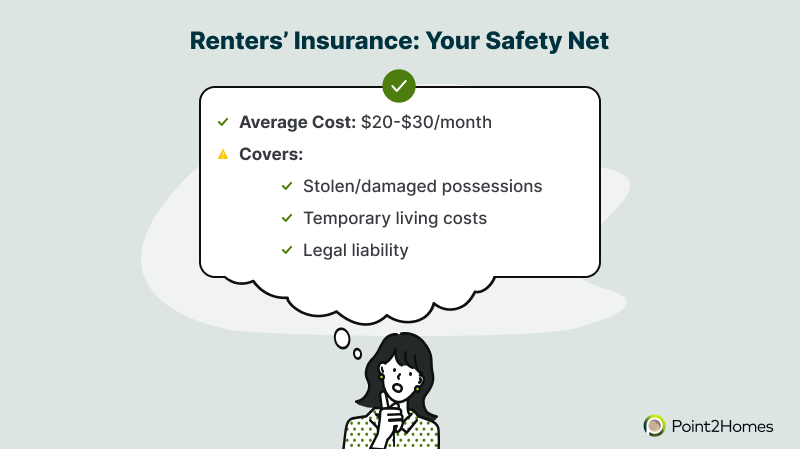
Renters’ insurance isn’t typically expensive — most renters pay just $20 to $30 a month. Still, since it’s not legally required, many choose to skip it to save money. But accidents and unexpected events can happen at any time. Without coverage, renters have no safety net during an already stressful situation. An extreme example would be the house gets struck by lightning and burns down, destroying everything inside.
With renters’ insurance:
- Living costs like hotel stays and meals would be covered
- Lost possessions would be reimbursed
- If the renter caused the fire, legal fees and damage repairs would be included too
Without insurance, renters are left to:
- Cover thousands in potential damage and legal costs if they’re at fault
- Replace all lost belongings out of pocket
- Pay for temporary housing
The Harsh Reality of Being Robbed Without Insurance
Being burgled is a traumatic experience. Beyond the loss of physical belongings, the emotional toll of having your safe space violated can leave lasting scars. And without insurance to fall back on, the situation becomes even more overwhelming.
The financial burden of replacing everything adds a new layer of stress. It’s easy to underestimate how much our belongings are worth. After all, most of us accumulate things gradually over months or years, rarely tracking the total value.
But when everything needs to be replaced all at once, the cost can be staggering. For many renters, covering that kind of expense in a single blow simply isn’t realistic
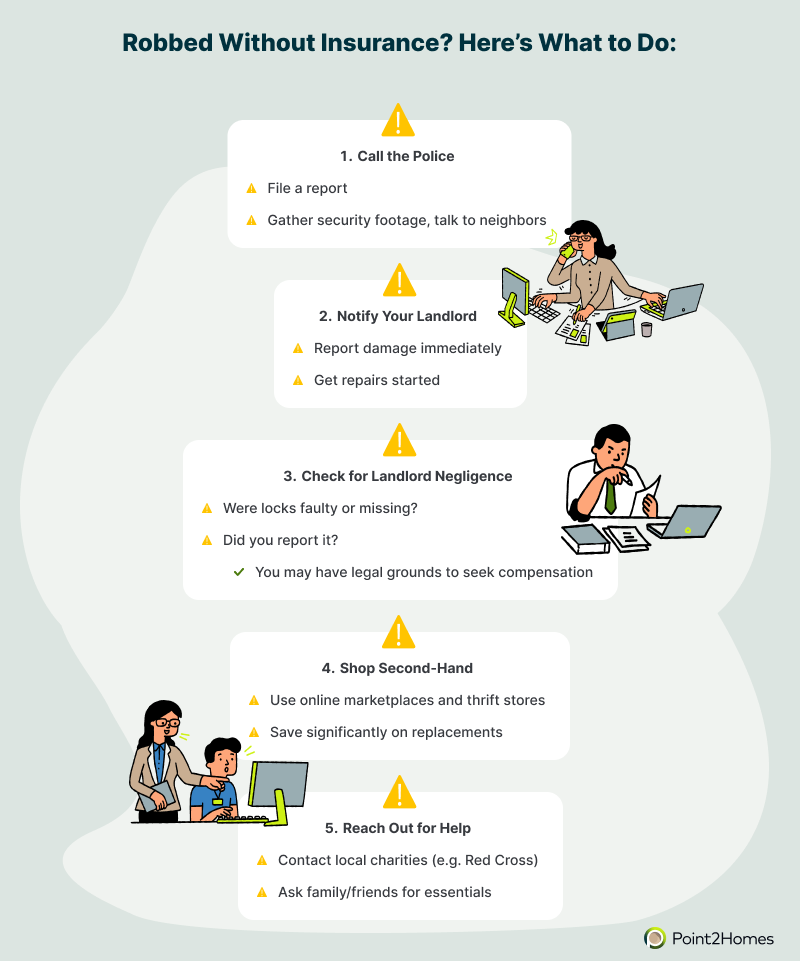
5 Steps Uninsured House Renters Can Take if They’re Robbed
Renters without insurance aren’t completely out of options after a burglary. Fortunately, there are practical steps they can take — and ways to replace essentials without breaking the bank.
1. Call the Police
This goes without saying, but the first step after a burglary — insured or not — is to call the police and file a report. The more detailed the report, the better the chances of recovering stolen property and catching the perpetrators.
Check for any available security camera footage and share it with law enforcement. If there are no cameras, ask neighbors if they noticed anything unusual.
2. Contact the Landlord
Notify your landlord as soon as possible. Let them know what happened and report any damage to the property. Renters’ insurance wouldn’t cover damage to the structure itself, and it’s generally the landlord’s responsibility to arrange repairs. The sooner they’re informed, the sooner the home can be secured again.
3. Check if Landlord Negligence Played a Role
Landlords are responsible for providing a safe and secure rental property. This includes ensuring all doors and windows have working locks, and in some areas, installing additional security features. If they’ve failed to meet these obligations, you may have grounds to seek compensation or even take legal action.
For example, if you reported faulty front door locks and the landlord ignored the issue, they may have violated the lease agreement. At a minimum, you could have legal grounds to withhold rent—provided you have proof of the reported issue.
4. Search Second-Hand
Replacing everything brand new can be financially overwhelming. Instead, turn to second-hand options. Online marketplaces and thrift stores are great places to find affordable replacements, and it’s easier than ever to find quality items at a fraction of the cost.
5. Contact Local Charities
If replacing items is still financially out of reach, consider contacting local charities. The Red Cross is a great starting point, especially for families or those in vulnerable situations. Don’t overlook your personal network — friends and family may be able to help with essentials like spare electronics or household items.
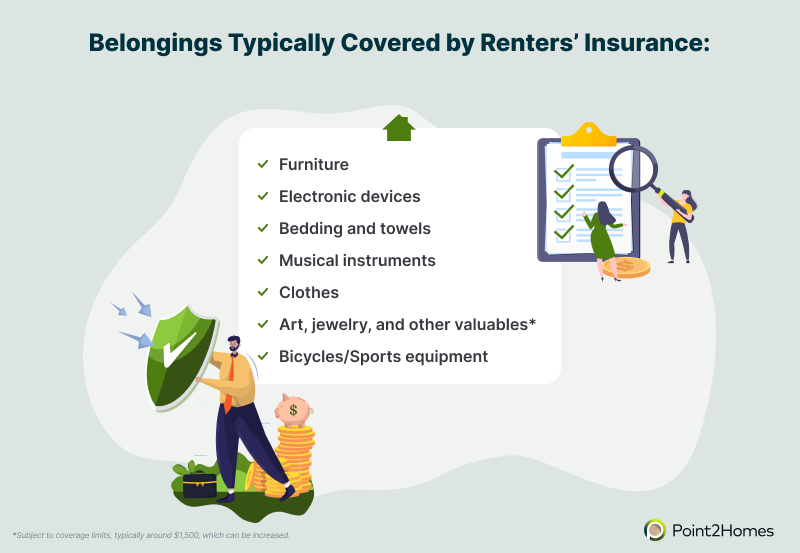
Being burgled is always a terrible experience — but facing it without insurance makes the situation even worse. While no policy can replace sentimental items or truly valuable keepsakes, renters’ insurance can make a big difference. For everything else, a solid policy can help cover the cost of stolen property — without you having to spend a dime.
This article is intended for informational purposes only and does not constitute legal, financial, or insurance advice. Security requirements, landlord responsibilities, tenant rights, and renters’ insurance coverage vary by jurisdiction and individual lease agreements. Renters who have experienced a burglary or are concerned about property security are encouraged to consult with a qualified attorney, licensed insurance professional, or local housing authority to receive guidance specific to their situation and location.
Image: Jannissimo; Ilusiku Studio; jesadaphorn/Shutterstock.com
