
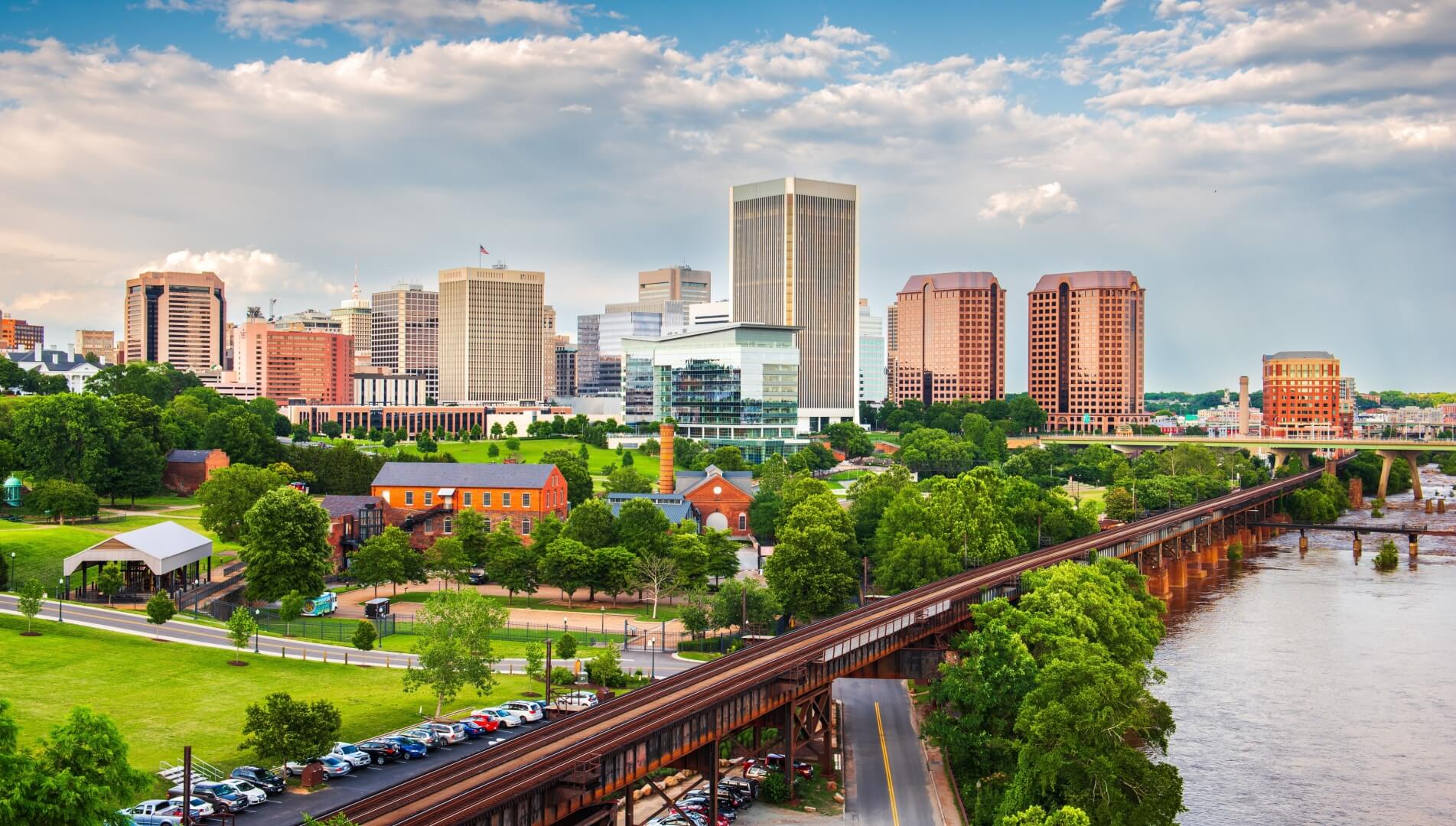
In a recent study carried out by Point2Homes, Richmond was found to be the best metro for house renters. Indeed, the city has a lot going for it, with superb entertainment options, a rich cultural scene, and a thriving economy.
But for many renters all over Richmond, one of the most important things about moving to a new city is how easy it is to get around. No matter how many boxes a city ticks, if it’s impossible to get around without a car, it’s a non-starter for some renters.
With that in mind, in this guide, we’ll take a good look at Richmond’s public transportation options.
What Public Transit Options Are There in Richmond, VA?
Public transportation in Richmond is provided by the Greater Richmond Transit Company, more commonly known as GRTC. The network primarily serves the independent city of Richmond, but also offers services to some parts of the surrounding counties, including Chesterfield, Hanover, and Henrico.
GRTC mostly provides a network of bus routes, boasting a fleet of around 160 diesel-powered and CNG-powered transit buses. Together, these serve 45 routes across the city.
1. Pulse (BRT)
The Pulse is a bus rapid transit service providing fast, reliable transport between two of the city’s largest business centers, Willow Lawn and Rockett’s Landing. Stopping at 14 stations in total, the route conveniently passes right through Downtown, providing excellent transport links in the heart of the city.
The Pulse runs every 10 minutes during weekdays, and every 15 minutes on weekends and evenings. The late-night service, between 11:30 pm and 1 am, runs every 30 minutes. Pulse stations are easy to navigate, with tall totem poles displaying the station name and direction of travel (east or west).
2. Local Buses
Richmond’s Downtown Transfer Station is the beating heart of the city’s public transportation. This central hub connects many of the local and express services, providing convenient travel throughout the city.
GRTC’s local bus services provide transport throughout the city, with more than 1,600 stops across more than 40 lines. Services operate seven days a week from 5 am to 1 am.
3. Express Services
Operating on weekdays, express commuter services provide a convenient option for commuters throughout the city and beyond. The four express routes provide travel throughout the city of Richmond, as well as parts of Petersburg, Chesterfield County, and Henrico County.
While stops in the suburbs are fewer and farther between compared to the inner city, many offer a park-and-ride service, preventing the need to drive all the way into Downtown.
4. Passenger Rail
Richmond is home to two passenger train stations, both served by Amtrak: the suburban Staples Mill Road Station in Henrico County, around 6 miles north of downtown, and the historic Main Street Station in the center of Richmond. Both stations receive regular services from major cities to the north, including NYC and Philadelphia.
Accessibility on Richmond’s Public Transport
Richmond’s public transport network is extremely friendly to wheelchair users, pram pushers, and anyone suffering a physical ailment that might make getting around tricky. All buses on the GRTC fleet offer low-floor entry, as well as wheelchair lifts.
Special paratransit services are available via the CARE (Community Assisted Ride Enterprise) initiative, with services running all day. Additionally, all operators are trained to assist with wheelchairs, strollers, and other devices that might otherwise struggle.
Visually impaired riders will find that all buses feature speakers that announce upcoming stops.
How Much Does Public Transport Cost in Richmond, VA?
All buses in the GRTC network are free for everyone to ride. The city is one of the few places in the U.S. that offers a zero-fare policy on all services, making travel throughout the city extremely affordable.
Train travel is pricier, with fares between Staples Mill Road Station and Richmond’s Main Street Station typically around $8 to $12 one way as standard.
What’s the Average Commute Time in Richmond, VA?
Commute times in Richmond tend to be shorter than the national average. On average, a typical Richmond commuter will spend around 22 minutes on the road, compared to the national average of around 27 minutes.
Is It Feasible To Cycle in Richmond, VA?
Cycling is becoming an increasingly popular way to get around Richmond. The city has invested in an increasing number of bike lanes and dedicated cycle routes that cover large parts of the city, particularly in the center. Additionally, all GRTC buses are fitted with bike racks, with space for 2 to 3 bikes.
Image credit: Sean Pavone / Shutterstock.com
