
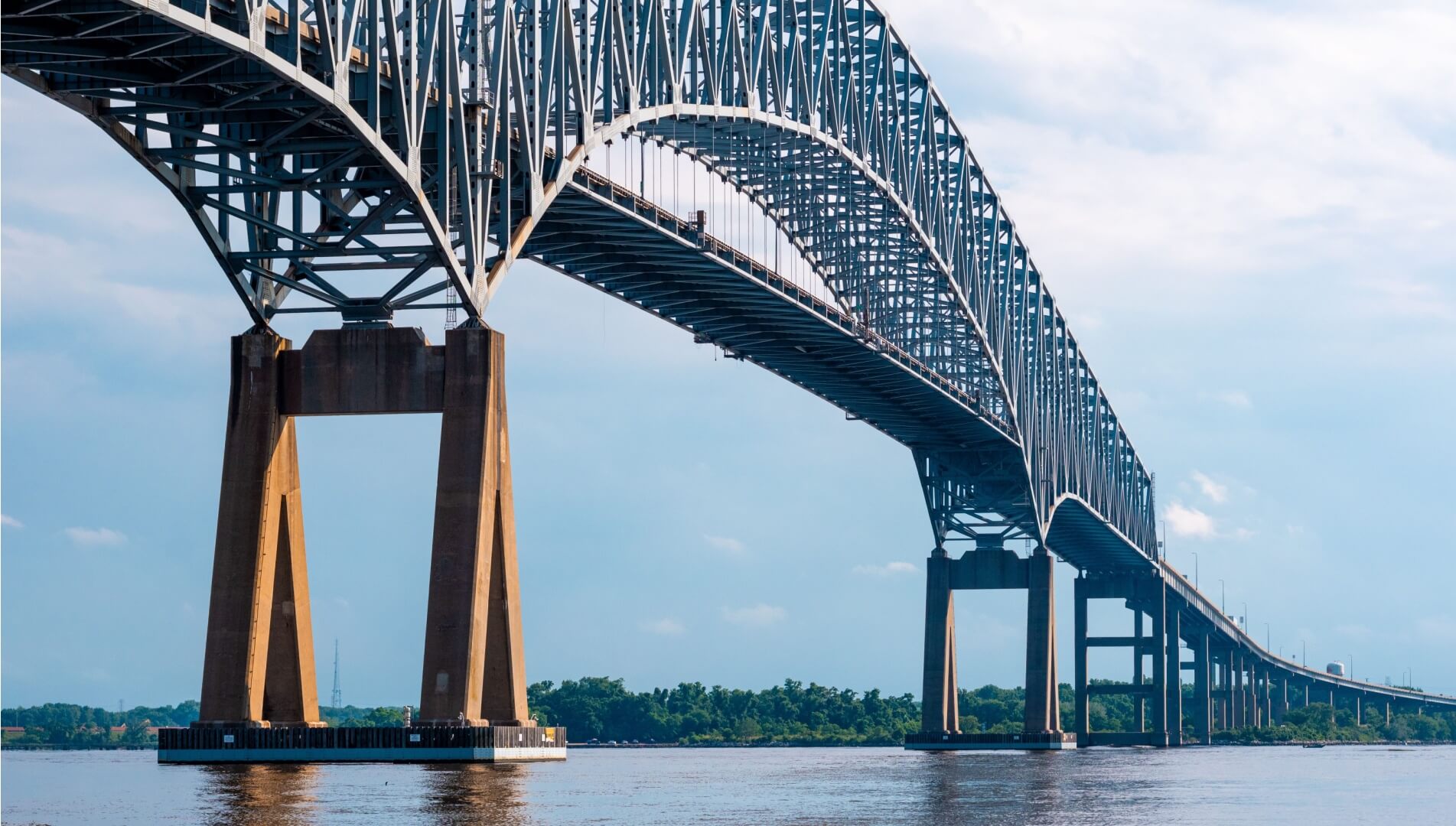
With a long and rich history, the seaport of Baltimore has grown into a major city on the U.S. East Coast. Boasting a vibrant art scene, a healthy economy, and plenty of things to see and do, there are many great reasons to start renting in Baltimore.
But, how reliable is the public transport in the city? In this guide, we’ll examine the various public transit options available in the city before looking at the costs and effectiveness.
What Public Transit Options Are There in Baltimore, MD?
The bulk of public transportation in Baltimore is provided by the Maryland Transit Administration (MTA). MTA operates a range of bus, light rail, metro, and train services in and around the city, providing a range of options for a city where almost half the residents don’t own a car.
1. MTA Buses
Buses provide the bulk of the public transport options in Baltimore and the wider metro area. With over 80 routes, bus travel in and around Baltimore is split into four main categories:
- CityLink: Color-coded, high-frequency buses that operate 24 hours a day. Services cover the Downtown grid and radiate out from the city along major routes.
- LocalLink: LocalLink buses are roughly split into two groups: crosstown routes and feeder routes, operating mostly on neighborhood streets between the CityLink routes.
- Express BusLink: Covering suburb-to-suburb and suburb-to-downtown routes, express routes make it easier than ever to get in and around the wider metro area.
- Commuter Services: Commuter bus options connect the city with other nearby metros, including Washington, D.C., as well as the numerous suburbs surrounding Baltimore.
Meanwhile, the Charm City Circulator is a free downtown service aimed at visitors and residents alike. Buses run every 15 minutes, with four lines to choose from, each taking in different parts of the downtown area.
2. Subway and Light Rail Services
In addition to its vast bus network, MTA offers a subway service, the Metro SubwayLink, and a light rail service, Light RailLink.
The Light RailLink slices through the city, connecting the Hunt Valley suburb with BWI Airport and the town of Glen Burnie. The service makes several stops through the city, including numerous Downtown stops, such as Penn Station. Mainline services run every 10 to 15 minutes on weekdays and every 15 minutes on weekends, while branch services run every 20 to 30 minutes on weekdays.
Meanwhile, the Metro SubwayLink runs from the suburb of Owings Mills into Downtown Baltimore. Services run every 8 to 11 minutes on weekdays, and every 15 minutes on weekends.
3. MARC Train
The Maryland Area Rail Commuter (MARC) train has two lines that serve Baltimore, the Penn Line and the Camden Line. The MARC train is the fastest commuter train in the U.S., with trains traveling up to 125 miles an hour on the Penn Line. Trains run seven days a week between Washington D.C., Baltimore, and Perryville.
4. Public Scooters and Bikes
Numerous public scooters, bicycles, and E-bikes are available to rent short-term in Baltimore. These dockless options allow renters to use an app to easily locate a mode of transport, ride it to their destination, and simply park it up, as long as it’s within the operator’s area of use.
5. Baltimore Water Taxi
The Baltimore Water Taxi is a great way to get around the various waterfront neighborhoods in Downtown. Riders need to purchase a day pass, which then allows unlimited hop-on, hop-off travel, ideal for seeing the attractions.
For commuters, three harbour connector services offer free travel across the water between Fell’s Point–Maritime Park and Locust Point, Locust Point and Canton Park, and Pier 5–National Aquarium and Federal Hill. Harbor Connector services run Monday to Friday between 6 am and 8 pm.
Accessibility on Baltimore’s Public Transport
The bulk of Baltimore’s public transport is accessible to all, with all MTA buses equipped with either wheelchair lifts or kneeling capability. Designated priority seats are also allocated, while announcements enable those with visual impairments to get around with ease.
Additionally, the light rail and subway both offer level boarding platforms, priority seating, and elevators for subway stations.
How Much Does Public Transport Cost in Baltimore, MD?
Public transport in Baltimore is fairly affordable, with regular fares for MTA services of $2 for a single trip, $4.60 for a day pass, $22 for a weekly pass, and $77 for a monthly pass. Concessions apply to students and seniors. These affordable prices are one of the main reasons why a recent Point2Homes study found that renters in Baltimore can save up to $7,131 by skipping the car (and all the costs associated with it) and opting for public transport.
MARC train fares range from around $6 to $13 one way, depending on how many stops are to be taken, though cheaper 5, 7, and 31-day passes can also be purchased. Water Taxi prices cost between $12 and $20 for a day pass.
Image credit: StockPerfect /Shutterstock.com
