

As a tenant, a good reputation can go a long way when finding a new house to rent. With a good reputation, a tenant may stand out from the crowd, ensuring they bag their ideal rental each and every time. From money management to communication skills, there are a lot of areas a tenant must focus on when trying to build a good reputation.
With that in mind, let’s take a look at what renters can do to ensure their tenant reputation is the best it can be.
Why a Good Tenant Reputation Is Important
A good tenant reputation goes a long way toward seeing a rental application approved or dismissed. It shows future landlords that the tenant is responsible and reliable and will treat their property with respect. Essentially, a good reputation offers landlords proof that their home will be in good hands.
This can be invaluable for renters who are applying for a new rental. A tenant with a good reputation and proven track record—whether paying the rent on time or keeping the unit in top condition—stands out from the crowd for many landlords and property managers.
As such, their applications often find their way to the top of the pile, rather than being dismissed. Without a good reputation, landlords take a large gamble if they approve a tenant with a sketchy credit history who lacks positive references.
Reputation, Credit Scores & Eviction Risk
That’s why credit scores are vital. It’s easy for landlords to check potential renters’ credit score and decide whom to choose based on that number, as usually the credit score is a reflection of a renter’s past financial behavior. Ranging between 300 and 850, these scores are established by taking into account a series of factors, such as payment history, credit utilization, length of the credit history and renters’ credit mix and amounts owed. All decisions, good and bad, have an impact on a renter’s credit score, which in turn impacts renters’ ability to find and secure the rental they want.
And there are many incidences that could wreck renters’ reputation and even lead to eviction. Although the main reason for evictions in the U.S. is nonpayment of rent, unauthorized pets, illegal subletting, and property damages can also get tenants in hot water, substantially damaging their reputation in the process.
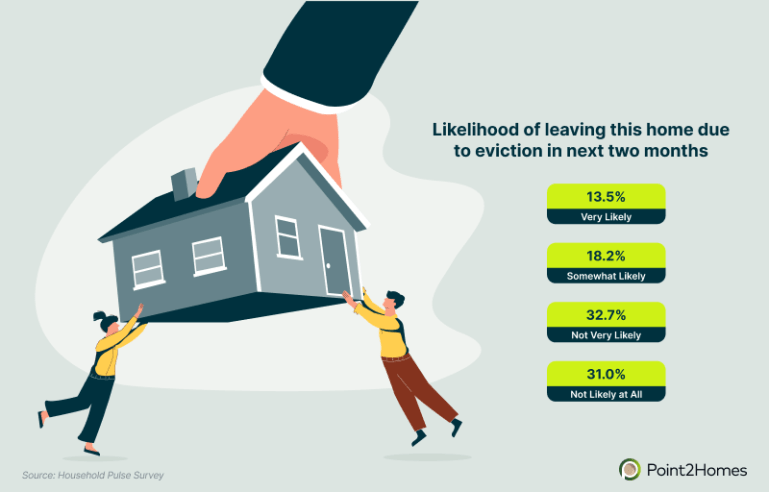
In fact, the U.S. Census Bureau’s Household Pulse Survey revealed that 13.5% of renter households are very likely to leave their current home due to eviction in the next two months, with another 18.2% being somewhat likely to go through an eviction in the following months.
12 Steps To Earning a Great Tenant Reputation
Great reputations need to be earned, but the good news is that renters only need to keep on top of a few things to ensure their reputation proceeds them. The following 12 steps will help any tenant earn a fantastic reputation.
1. Keep a Clean Criminal Record
Landlords and property managers alike will often be wary of tenants with a criminal record and it can be a real hindrance when applying for rentals. For most applications, tenants will undergo a criminal background check, with previous felonies being a big red flag.
The occasional parking violation may not be much of an issue, but more serious crimes will see applicants dismissed pretty quickly. As one thing that most landlords will not budge on, maintaining a clean rap sheet is an integral part of building a good tenant reputation.
2. Ensure a Strong, Stable Income
Landlords, especially those renting houses on a long-term basis, covet tenants who can prove that their circumstances are stable. The best proof is regular income from a stable job. Tenants who stay in the same job for two years or more are particularly desirable.
As such, try not to switch jobs too much, and aim to maintain a steady, stable income. The easier it is to verify this, the better. So, for the self-employed, keep detailed records and ensure proof of income is readily available.
3. Never Miss a Payment
A solid payment history also goes a long way to solidifying a great tenant reputation—simply put, tenants who don’t miss or delay payments prove themselves responsible and reliable. It can help to set up automatic payments for the rent each month and try to pay a day or so early in case of any issues.
It’s not just the rent either. Be sure to pay all the utility bills on time, as well as any other recurring fees, such as renters’ insurance, HOA fees, or parking permits. Ensure there’s always enough money in the bank to cover everything, with a safety cushion just in case.
4. Take Care With Money Management
Tenants who prove to be financially responsible seldom miss payments. So, get into good budgeting habits, ensuring all costs outgoing are accounted for and covered each month. Having a safety cushion in savings is also wise and can help out significantly in a hot market. For example, to seal the deal, a tenant may offer two or three months’ rent upfront.
Financially responsible tenants will ensure they’re not spending beyond their means. Generally speaking, this means ensuring a household income that is at least three times more than the rent, but the higher the better.
5. Build a Strong Credit Score
Most renters and buyers neglect their credit score until they need it. However, by regularly keeping on top of it, tenants can be well-prepared for when they do find themselves applying for rentals once again. The majority of landlords are looking for a credit score of at least 650, but it’s always worth striving to get it much higher.
Renters should avoid unnecessary credit with repayments that would put a strain on their budget and jeopardize their financial security.
6. Report Maintenance Issues Promptly
When renting a house, seemingly small issues can quickly grow into more significant problems if they’re not addressed soon enough. That’s why tenants who report maintenance issues soon after they notice them stand out from the crowd.
Having said that, reporting every minor issue can have the opposite effect and damage a tenant’s reputation. It’s important to be aware of what maintenance tasks the tenant is responsible for, such as changing lightbulbs. Full details should be in the lease agreement.
7. Stick To the Lease Terms
On the subject of the lease agreement, tenants who familiarize themselves with the terms and conditions of it will find it much easier to stick to. And by not violating the lease terms at all, they can build a good tenant reputation in no time.
It’s worth bearing in mind that the lease agreement is a legally binding document, so adhering to the terms is a must. Pay particular attention to any rules regarding subletting, pets, or altering the property.
8. Maintain Good Communication
Tenants who are approachable, honest, and upfront about things are a landlord’s dream. Don’t be afraid to reach out about any concerns or ask questions regarding the house or lease terms. And, when planning renovations or improvements, always ask permission first.
Good communication is helpful for both the tenant and the landlord, so it’s always worth ensuring that communication channels are open.
9. Treat the House Like a Home
The best tenants treat their rental house like it is their own home. This means staying on top of small maintenance tasks, keeping the house clean, and reporting any larger issues early. Trash disposal is an important factor here. Neglecting to take the trash out, or not sealing it properly, can lead to pest problems, which can dent the reputation of the tenant.
For the most part, tenants who keep on top of cleaning, don’t allow trash to pile up, and don’t store random items on the driveway, will soon garner a glowing reputation. Keeping outside spaces clean and organized is also important. Indeed, it’s not uncommon for tenants to bear the responsibility of yardwork, so be sure to not neglect these duties.
10. Be Organized and Considerate
Tenants who prove themselves organized will also soon grow a great reputation. It’s not just about taking good care of finances either. Organization in terms of future plans also goes a long way. For example, a tenant who wishes to extend their lease is advised to let their landlord know as far in advance as possible. This stops the landlord from beginning the process of finding new tenants, saving them time and money, which will be much appreciated.
Being organized in other ways can also leave a good impression. Landlords and property managers can be wary of renters who seem to attract chaos. Regular drama or avoidable struggles are a red flag, so it certainly helps to be organized. Beyond the positive impact it has on the landlord’s perception of the renter, being organized also leads to a more relaxed lifestyle for the tenants themselves, so everybody wins.
11. Garner Good References
When applying for a rental, applicants are typically required to provide a variety of references. As such, garnering references is an integral part of building a good tenant reputation. It helps to have a mix of professional and personal references, as well as feedback from previous landlords.
With that in mind, tenants who strive to make a good impression on the people around them—in all spheres of life—will generally earn a good reputation pretty quickly. A good work ethic and approachable manner will see employees stand out, for example. Meanwhile, partaking in social events and clubs outside of work can help build personal relationships and good references. In that vein, volunteering can be extremely rewarding.
12. Be a Good Neighbor
Bad neighbors can ruin life in any home. Fortunately, being a good neighbor is simple; show the people around you respect and strive to maintain a peaceful environment. By being considerate of other people’s needs, tenants will earn a glowing reputation.
Beyond the obvious points, such as keeping the noise down, it also helps to be proactive as a neighbor. For example, if noisy construction work is scheduled or the tenant is planning a get-together, their neighbors are far less likely to get upset about it if they were pre-warned.
Short Recap:
1. Keep a Clean Criminal Record
2. Ensure a Strong, Stable Income
3. Never Miss a Payment
4. Take Care With Money Management
5. Build a Strong Credit Score
6. Report Maintenance Issues Promptly
7. Stick To the Lease Terms
8. Maintain Good Communication
9. Treat the House Like a Home
10. Be Organized and Considerate
11. Garner Good References
12. Be a Good Neighbor
Image Credit: fizkes / Shutterstock.com
Image Credit: Red Vector / Shutterstock.com
